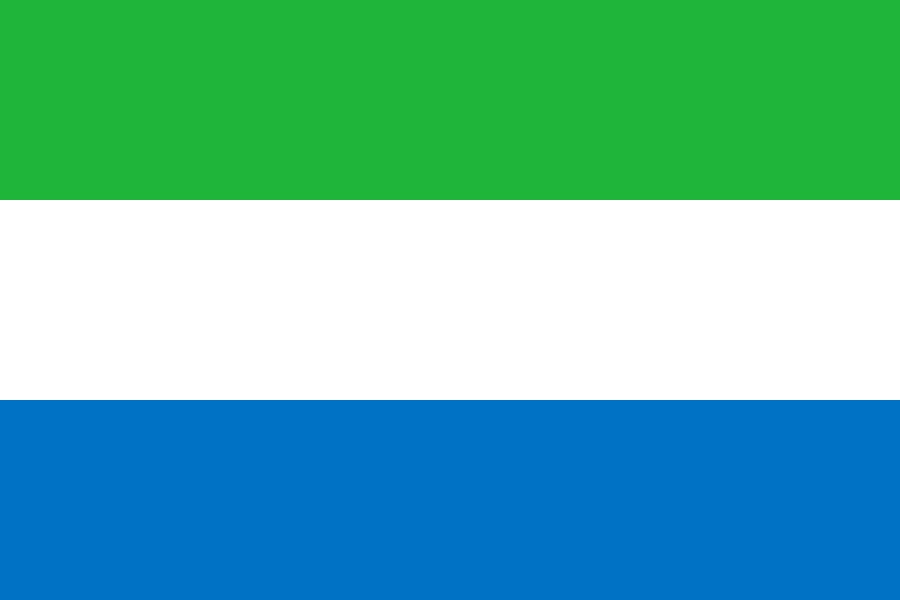
Sierra Leone Skips Winter Tyre Rules Entirely in 2026
Data verified:
3 min readSierra Leone drives on the right side of the road. The minimum driving age is 18. The motorway speed limit is 100 km/h. The general emergency number is 112. Foreign drivers should carry an International Driving Permit (IDP) alongside their valid national licence.
Sierra Leone: No legal winter tyre mandate exists, but that does not mean you can skip them safely. Use our tyre checker to see exactly what you need.
Personalise for Your Trip
See how Sierra Leone differs from your home country
Winter tyre rules simply don’t exist in Sierra Leone’s traffic code. Studded tyres go unaddressed for this climate too, which leaves 1.6mm as the only figure that matters for compliance. Standard or all-season tyres suit the country’s conditions year-round.
Whether you are driving your own vehicle or renting one in Sierra Leone, knowing the local rules costs nothing and saves both the fine and the argument.
Tyre Law Summary for Sierra Leone
| Regulation | Status |
|---|---|
| Winter tyres | Not required |
| Required period | N/A |
| Minimum tread depth | 1.6 mm |
| Recommended tread | 3.0 mm |
| Studded tyres | Not applicable |
| All-season accepted | Yes |
| Required markings | M+S or 3PMSF |
Tyre Choice in Sierra Leone
Sierra Leone does not have winter tyre regulations. Year-round temperatures stay well above the 7°C threshold where summer tyre compounds lose effectiveness, so standard summer tyres or all-season tyres are appropriate throughout the year.
The priority in Sierra Leone is wet-weather performance. Heavy rainfall and standing water on roads make hydroplaning a real risk. Choose tyres with deep, wide grooves that channel water efficiently, and replace them well before reaching the 1.6 mm legal minimum.
Minimum Tread Depth in Sierra Leone
Sierra Leone sets the legal tread depth minimum at 1.6 mm. Inspectors measure across the central three-quarters of the tread surface.
Tyre professionals in Sierra Leone advise changing at 3.0 mm. Waiting until 1.6 mm leaves almost no safety margin. The difference in wet braking at 80 km/h:
| Tread Depth | Wet Braking (80 km/h) | Risk Level |
|---|---|---|
| 8 mm (new tyre) | ~26 metres | Low |
| 3 mm | ~32 metres | Moderate |
| 1.6 mm (legal minimum) | ~43 metres | High |
Road surface temperatures in Sierra Leone can exceed 60°C in summer, softening rubber and accelerating wear. A tyre near 1.6 mm in these conditions has far less grip than the same tread depth in a cooler climate.
Penalties for Tyre Violations in Sierra Leone
Driving with illegal tyres in Sierra Leone risks fines and, more critically, insurance problems. If you have an accident and your tyres do not meet the legal standard, your insurer may reduce or refuse your claim entirely.
Tyre Choice for Sierra Leone’s Climate
Sierra Leone has tropical climate with a rainy season. Tyre selection here is about wet grip and heat resistance, not winter performance.
Key considerations for Sierra Leone:
- Choose tyres rated for wet performance — hydroplaning is the main tyre hazard in Sierra Leone
- Heat degrades rubber faster, so check tyre age (DOT code on sidewall) and replace after 4-5 years
- Higher tyre pressures may be needed to compensate for heat expansion — check when tyres are cold
- Unpaved roads outside Sierra Leone’s main cities accelerate tread wear; inspect tyres after rough sections
Road Conditions and Tyre Wear in Sierra Leone
Roads in Sierra Leone range from well-surfaced highways near Freetown to rough, unpaved tracks in rural areas. This variety means tyre condition matters even more than in countries with uniformly smooth roads.
- Potholes and broken surfaces cause sidewall damage — inspect tyres after rough sections
- Consider tyres with reinforced sidewalls for extended travel outside Sierra Leone’s main cities
- Carry a repair kit and compressor alongside your spare tyre
How Sierra Leone’s Tyre Laws Compare to Neighbours
If you are driving across borders from Sierra Leone, tyre regulations may change at each crossing:
- Benin: Winter tyres not required. Tread: 1.6 mm. Studded: not applicable.
- Guinea: Winter tyres not required. Tread: 1.6 mm. Studded: not applicable.
- Togo: Winter tyres not required. Tread: 1.6 mm. Studded: not applicable.
- Gambia: Winter tyres not required. Tread: 1.6 mm. Studded: not applicable.
Need the full picture? Our Driving in Sierra Leone page covers speed limits, fines, equipment rules, and more.
Tyre Regulations Summary
| Winter Tyres | Not required |
| Period | No fixed dates |
| Min. Tread Depth | 1.6 mm |
| Studded Tyres | Not Applicable |
| All-Season | Accepted |
| Marking | — |
Driving through more than one country this winter? Compare winter tyre rules, dates and legal tread depths for every country →
Driving in Sierra Leone — Key Facts
Speed Limits
- Urban: 50 km/h
- Rural: 80 km/h
- Motorway: 100 km/h
Emergency Numbers
- Police: 112
- Ambulance: 112
- Fire: 112
- General: 112
Country Info
- Capital: Freetown
- Driving Side: Right
- Languages: English
- Currency: Leone (Le)
- Population: 9,077,691
Complete Driving Guide for Sierra Leone
Speed limits, traffic rules, mandatory equipment, license requirements and more.
View driving guideRenting a Car in Sierra Leone?
Compare prices from all major rental companies. Free cancellation on most bookings.
Compare Car Rental PricesSome links on this page are affiliate links. We may earn a commission at no extra cost to you. Learn more.
Frequently Asked Questions
Standard summer tyres or all-season tyres with good wet-weather performance are ideal for Sierra Leone's tropical climate. Look for tyres with deep, wide grooves that channel water away efficiently. Winter tyres are unnecessary and would wear out quickly in the heat.
The legal minimum tyre tread depth in Sierra Leone is 1.6 mm. However, tyre safety experts recommend replacing tyres at 3 mm for wet conditions and 4 mm before winter. At 1.6 mm, wet braking distance at 80 km/h is approximately 65% longer than with new tyres.
Winter tyres are not legally required in Sierra Leone. However, if you drive in areas that experience cold temperatures below 7°C, winter or all-season tyres will provide better grip and safety than summer tyres.
Studded tyres are not commonly used or regulated in Sierra Leone. Given the climate, standard tyres appropriate for the season are sufficient for safe driving.
Reputable rental companies in Sierra Leone should provide vehicles with season-appropriate tyres. Always confirm this when booking, especially if travelling during winter. Inspect the tyres when collecting the vehicle — check tread depth and look for visible damage. Report any concerns before driving away.
Sierra Leone drives on the right. Tyre wear patterns may differ if your vehicle was designed for left-hand traffic, as weight distribution changes. Check tyre pressure monthly, inspect for damage regularly, and never mix tyre types on the same axle.
Related Articles
Dashcam Bans 2026: Austria Can Fine You EUR 10,000
Austrian privacy law makes filming the road effectively illegal, Luxembourg bans them in private cars, and German courts have taken footage since 2018.
Driving LawsEurope Speeding Fines 2026: EUR 15 to an Uncapped Day-Fine
The same 20 km/h over the limit costs EUR 15 at the cheap end and EUR 70 on a German Autobahn, and in Switzerland a share of income with no ceiling.
Driving LawsRadar Detectors in Europe 2026 — €1,500 Fine in France
France seizes the device and fines €1,500 plus six licence points; Germany charges €75 for using one, and Waze camera alerts are unlawful in two countries.
Driving in Sierra Leone
Speed limits, driving rules & travel tips
 Algeria
 Angola
 Benin
Benin Botswana
 Burkina Faso
 Burundi