Slovenia's blood alcohol limit is 0.05% BAC, with stricter limits for novice and professional drivers. But check your tyres — compulsory 15 Nov-15 Mar, €125 if you skip them.
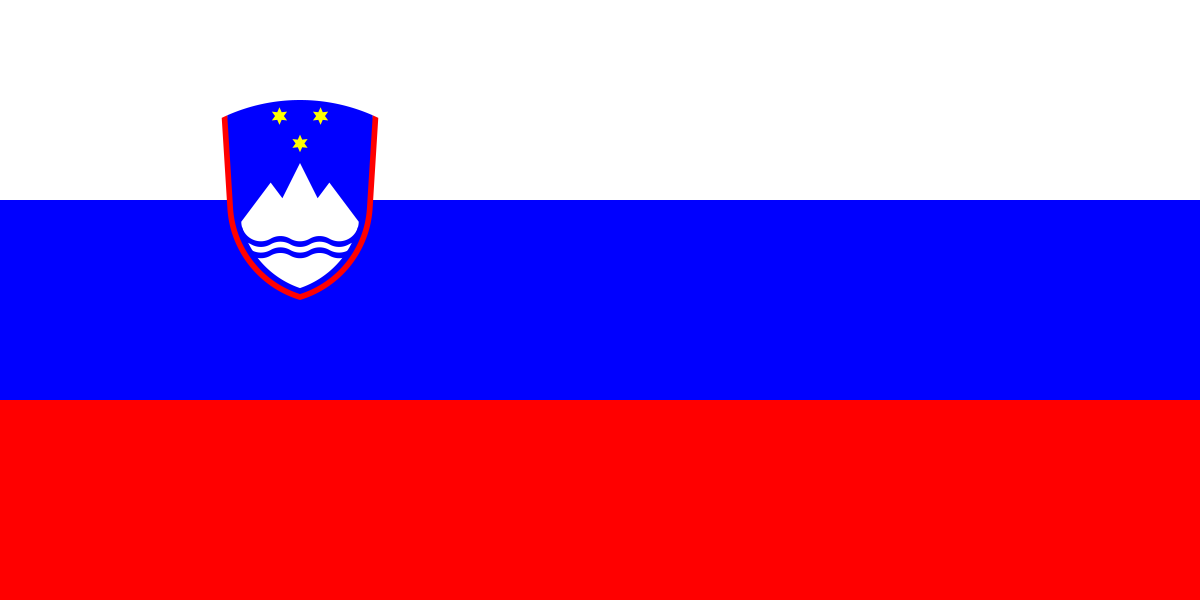
Slovenia Alcohol Limit 2026: 0.05% BAC and Licence Loss
Data verified:
5 min readSlovenia drives on the right side of the road. The minimum driving age is 16. The motorway speed limit is 130 km/h. The general emergency number is 112. The legal blood alcohol limit is 0.05% BAC. Visitors need an International Driving Permit (IDP) alongside their national licence unless it was issued in the EU/EEA.
Slovenia has right-hand traffic and a BAC limit of 0.05% — stricter than the US 0.08%. Speed cameras cover moderate stretches of the primary motorway network, and 20+ km/h speeding costs EUR 120-300.
Driving Difficulty: Slovenia
Small country, good motorways, vignette needed, scenic mountain roads
2.2/5 · Easy (TyreMap difficulty index)
Personalise for Your Trip
See how Slovenia differs from your home country
Watch: Driving in Slovenia
Driving in Slovenia from the UK · Richard Fanders
Slovenia’s legal blood alcohol limit is 0.05% BAC, far looser than neighbouring Slovakia’s zero tolerance, and going over it brings fines, licence suspension and possible criminal charges — with stricter limits again for novice and professional drivers. On the road the defaults are 50 km/h in built-up areas, 90 km/h on rural roads and 130 km/h on motorways, where being only 10 km/h over already costs EUR 50-120.
Your case: Between 15 November and 15 March it is the tyres, not the drinks question, that stops a car at the border of the Julian Alps. Slovenia tyre laws carry the 3 mm winter tread, the M+S or 3PMSF marking and the €125 penalty for arriving on summer rubber.
Slovenia’s licence ladder starts at 16 with supervision, with the unrestricted car licence available from 18.
Emergency Numbers in Slovenia
General Emergency: 112 | Police: 112
Save these numbers before you start driving. In Slovenia, emergency calls are free from any phone.
Speed Limits in Slovenia
The default speed limits for passenger cars in Slovenia are 50 km/h in built-up areas, 90 km/h on rural roads, and 130 km/h on motorways.
Trucks and vehicles over 3.5 tonnes have lower limits: 50 km/h urban, 80 km/h rural, and 80 km/h on motorways.
For comparison, motorway limits in nearby countries: Poland (140 km/h).
Slovenia has moderate speed camera coverage across major roads and motorways. The typical enforcement tolerance is about 5 km/h.
Important: Posted signs always override default limits. Watch for temporary restrictions in construction zones, near schools, and in residential areas.
Speeding Fines and Penalties
Speeding fines in Slovenia escalate based on how far you exceed the limit. Exceeding by up to 10 km/h: EUR 50-120. Exceeding by 11-20 km/h: EUR 120-300 + 3 penalty points. Over 20 km/h: EUR 300-1,200 + 5 penalty points + licence suspension or more.
Warning for foreign drivers: Slovenia pursues unpaid fines through cross-border enforcement agreements. You may receive a penalty notice at your home address weeks or months after your trip.
Other common fines:
- Mobile phone use while driving: EUR 120 + 3 penalty points
- Running a red light: EUR 250 + 4 penalty points
- Seatbelt violation: EUR 120
Traffic Rules and Regulations
Drive on the right side of the road. Overtake on the left. At roundabouts, enter counter-clockwise and yield to traffic already circulating.
Seatbelts are mandatory for all occupants. Children must use appropriate restraint systems based on their age and height.
Using a hand-held phone while driving is illegal. The fine is EUR 120 + 3 penalty points. Use hands-free devices only.
Daytime running lights are required in most situations. Dipped headlights must be used in tunnels, rain, and reduced visibility.
Priority at intersections follows posted signs. When no signs are present, yield to traffic from the right.
Drink-Driving Laws and Alcohol Limits
The legal blood alcohol limit in Slovenia is 0.05% BAC. This is higher than Slovakia (0.00% (zero tolerance) BAC). Exceeding this limit results in fines, licence suspension, and possible criminal charges. For novice drivers and professional drivers, stricter limits may apply.
The safest approach is to not drink at all if you will be driving. Alcohol affects reaction time and judgement regardless of the legal limit.
Tyre Requirements and Regulations
Winter tyre requirement in Slovenia: Required.
The legal minimum tread depth is 1.6 mm. Safety experts recommend replacing tyres at 3.0 mm for adequate grip.
Studded tyres are prohibited in Slovenia.
For detailed tyre law information, see our Tyre Laws in Slovenia guide.
Mandatory Vehicle Equipment
Vehicles in Slovenia must carry the following:
Required:
- Warning triangle
- Reflective vest (high-visibility)
- First aid kit
Recommended:
- Fire extinguisher
- Spare bulbs
Keep all equipment accessible — not buried under luggage. Police may check during routine stops.
Driving License Requirements
EU and EEA driving licences are valid in Slovenia without additional documentation. Always carry your original driving licence — photocopies are not accepted.
The minimum driving age is 16 years.
EU/EEA licences valid. Non-EU visitors need IDP.
Parking and Fuel
City-centre parking in Slovenia is typically paid — use parking meters, ticket machines, or mobile payment apps. Look for P+R (park and ride) facilities on the outskirts connected to public transport.
Fuel prices change every week. The figures in the box at the top of this page come from the European Commission’s Weekly Oil Bulletin for Slovenia, taxes included, and are refreshed when a new bulletin appears.
Most fuel stations accept major credit and debit cards. In rural areas, keep your tank above half — stations may be far apart.
Seasonal Driving Conditions
Slovenia has continental climate with distinct seasons. Winter driving (November to March) requires caution — ice, snow, and reduced visibility are common. Clear all snow and ice from your vehicle before driving. Allow extra following distance on slippery roads.
Summer driving is generally straightforward with long daylight hours. Watch for tourist traffic near popular destinations.
Practical Driving Tips for Slovenia
- Speed camera warning apps (Waze, Google Maps) are legal here.
- Dashcams are legal and recommended for evidence in case of an accident.
- Police can issue on-the-spot fines. Carry cash or a valid payment card.
- Download offline maps of Slovenia before your trip — mobile signal can be unreliable on rural roads.
- Check if you need a motorway vignette (toll sticker) or an environmental zone sticker for city driving.
- Take a break every 2 hours on long drives. Fatigue is a leading cause of road accidents.
- Use our interactive tools on this page — compare rules with your home country and calculate potential fines before you set off.
Speed Limits in Slovenia
| Road Type | Cars | Trucks (>3.5t) |
|---|---|---|
| Urban | 50 km/h | 50 km/h |
| Rural | 90 km/h | 80 km/h |
| Motorway | 130 km/h | 80 km/h |
Speed Enforcement in Slovenia
What tourists actually face on the road
Tolerance
5 km/h
Foreign Plates
Tracked
Radar Apps
Legal
Dashcams
Legal
Cross-border fine collection: Slovenia can pursue unpaid fines through EU/international agreements. Fines may be sent to your home address months after your trip.
Section control on A1 motorway. E-vignette enforced by cameras. Police frequent A1/A2 corridors during summer transit to Croatia.
Traffic Fines in Slovenia
| Offence | Penalty |
|---|---|
| Mobile phone use while driving | EUR 120 + 3 penalty points |
| No seatbelt | EUR 120 |
| Running a red light | EUR 250 + 4 penalty points |
| Speeding (1-10 km/h over) | EUR 50-120 |
| Speeding (11-20 km/h over) | EUR 120-300 + 3 penalty points |
| Speeding (21-30+ km/h over) | EUR 300-1,200 + 5 penalty points + licence suspension |
Penalties may vary by region and circumstances. Always check current local regulations.
Mandatory Equipment in Slovenia
Winter tyres in Slovenia — 2026–27 season
Winter tyres are compulsory on fixed dates in Slovenia: 15 Nov - 15 Mar.
- Legal winter tread minimum: 3 mm — not the 1.6 mm figure most guides quote, which is the year-round minimum.
- Accepted marking: M+S or 3PMSF (min 3 mm tread)
- Studded tyres: banned
- Penalty: EUR 125 (EUR 417 if the car causes an obstruction)
In Slovene the rule is zimske pnevmatike, and snow chains are snežne verige — that is the wording on signs, in hire-car paperwork and on any penalty notice.
Checked against national legislation · Full Slovenia tyre law · Compare all countries
Licence Requirements for Foreign Drivers
EU/EEA licences valid. Non-EU visitors need IDP.
Emergency Numbers in Slovenia
These numbers are free to call and available 24/7. When calling, state your location and the nature of the emergency.
City driving guides in Slovenia
Parking, access zones and local rules for 1 city.
Tyre Laws in Slovenia
Winter tyre requirements, tread depth rules, and studded tyre regulations.
View tyre regulationsAvoid a fine in Slovenia
Who pays a driving fine abroad, the hire-car admin-fee trap, and how to appeal.
Read the fine guide Slovenia needs a motorway vignette — buy it rightDriving in Slovenia on a foreign licence
Nationality-specific licence, IDP & rules — pick where your licence is from:
Renting a Car in Slovenia?
Compare prices from all major rental companies. Free cancellation on most bookings.
Compare Car Rental PricesSome links on this page are affiliate links. We may earn a commission at no extra cost to you. How our affiliate links work.
Recent changes to this page
- Template claim that any foreign licence is valid for 12 months removed; the period depends on where the licence was issued and our record has no single figure.
- Fuel prices now come from the European Commission Weekly Oil Bulletin (dated, taxes included) instead of an undated estimate.
- Opening rewritten to lead with the 0.05% blood alcohol limit and its consequences, with a tyre-law bridge for winter Alpine trips; title, description and quick answer aligned to the alcohol-limit question this page is found for. Licence line corrected — 16 is supervised only, the unrestricted car licence comes at 18 (TyreMap country data).
- Title, description and introduction rewritten from this page's own data (no shared template wording).
Frequently Asked Questions
In Slovenia, the default speed limits for passenger vehicles are: urban areas 50 km/h (31 mph), rural roads 90 km/h (56 mph), and motorways 130 km/h (81 mph). Always follow posted signs as limits may differ on specific roads.
In Slovenia, traffic drives on the right side of the road. Vehicles have the steering wheel on the left side. If you are visiting from a country that drives on the left, take extra care at intersections, roundabouts, and when overtaking.
EU/EEA license holders generally do not need an IDP for short visits to Slovenia. However, drivers from outside the EU/EEA should carry an International Driving Permit alongside their valid national driving license. An IDP translates your license into multiple languages and is recognized internationally. Check with the embassy of Slovenia for the most current requirements.
Vehicles in Slovenia must carry: Warning triangle, Reflective vest, First aid kit. Failure to carry mandatory equipment can result in on-the-spot fines during police checks. It is advisable to keep all required items easily accessible in your vehicle.
The general emergency number in Slovenia is 112. These numbers are free to call and available 24/7. When calling, be prepared to state your location and the nature of the emergency.
Using a hand-held mobile phone while driving is prohibited in Slovenia. Hands-free systems (Bluetooth, speakerphone, or mounted devices) are permitted. Penalties for mobile phone use while driving typically include fines. For safety, always use hands-free solutions or pull over to use your phone.
When driving in Slovenia, you should always carry: your valid driving license (and IDP if applicable), vehicle registration document, valid insurance certificate (Green Card for European countries), and your passport or national ID. Rental car drivers should also carry the rental agreement. Police may request these documents during routine checks.
The minimum age to drive a car in Slovenia is 16 years old. Some categories of vehicles (such as motorcycles or heavy vehicles) may have different age requirements. Novice drivers may face additional restrictions during their first years of driving.
Driving in Slovenia is generally safe for tourists who are prepared. Before driving, familiarize yourself with local traffic rules, road signs, and driving customs. Consider downloading offline maps, carrying emergency supplies, and purchasing comprehensive insurance. Avoid driving at night in unfamiliar areas if possible.
Yes, Slovenia actively enforces fines against foreign-registered vehicles. A notice can still reach your home address, because authorities use commercial address-tracing services. What does not exist is automatic EU enforcement — Directive 2015/413 covers only eight road-safety offences and emission-zone violations are not among them. Unpaid fines may arrive by mail months after your trip.
Slovenia has a moderate network of speed cameras with expanding coverage. The typical enforcement tolerance is around 5 km/h above the posted limit. Speed camera warning apps (like Waze, Google Maps) are legal to use in Slovenia.
For Slovenia: EU/EEA driving licences are valid. An IDP is recommended but not always required. Always carry your original licence alongside the IDP.
If you receive a traffic fine in Slovenia: police may require on-the-spot payment from foreign drivers. A notice can still reach your home address, because authorities use commercial address-tracing services. What does not exist is automatic EU enforcement — Directive 2015/413 covers only eight road-safety offences and emission-zone violations are not among them. Rental car companies will always pass camera fines to the registered driver with an admin fee.
Get Driving Law Updates
Speed limits, fines and tyre laws change frequently. Get monthly updates for the countries you drive in.
Related Articles
Are Dashcams Legal in Austria? No — EUR 10,000 Fine in 2026
Country-by-country status for 2026, which courts accept the footage, the confiscation risk at an Austrian stop, and the rule that catches hire cars.
Driving LawsEurope Speeding Fines 2026: EUR 15 to an Uncapped Day-Fine
The same 20 km/h over the limit costs EUR 15 at the cheap end and EUR 70 on a German Autobahn, and in Switzerland a share of income with no ceiling.
Driving LawsRadar Detectors Legal in Europe 2026: 5 Bans, €1,500 Fine
The 2026 table for all of Europe: hardware versus camera-warning apps, five outright bans, France's EUR 1,500 seizure and Germany's EUR 75 use-only rule.
Major Cities
Common Questions
Explore Guides
How Slovenia compares worldwide
Compare Slovenia with Other Countries
Slovenia Tyre Laws
Winter tyres, tread depth & tyre regulations
 Albania
 Andorra
 Austria
 Belarus
 Belgium
 Bosnia and Herzegovina