Senegal drives on the right, and a foreign licence is good for six months — the international permit is a translation aid, not a requirement. After a crash, call the police on 17 and wait.
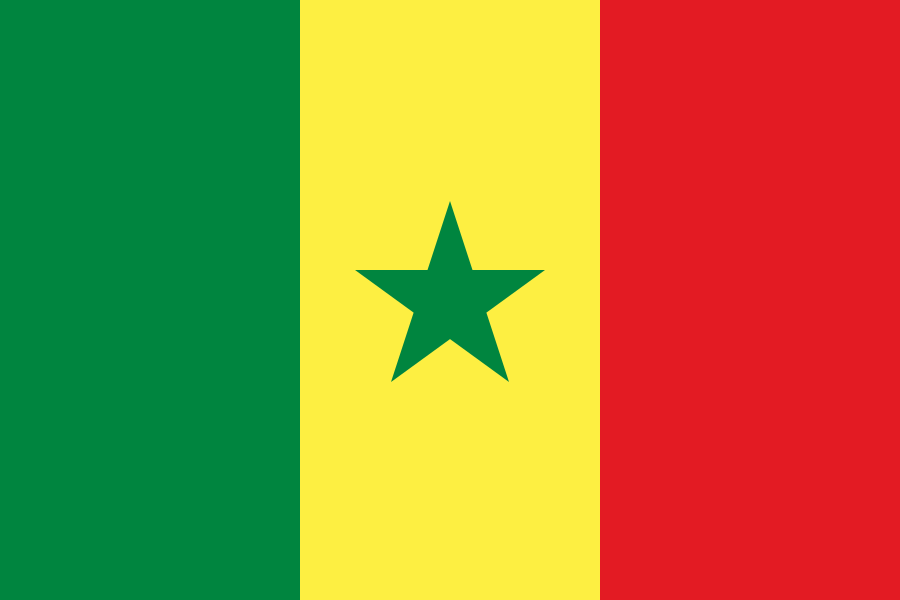
Driving in Senegal 2026: Your Licence Lasts 6 Months
Data verified:
5 min readSenegal drives on the right side of the road. The minimum driving age is 18. The motorway speed limit is 100 km/h. The legal blood alcohol limit is 0.02% BAC.
The paperwork panic most visitors arrive with is misplaced — a foreign licence is good for six months and the international permit is only a translation — but the accident rule is real: call the police on 17 and leave the vehicles where they are until officers arrive. The Dakar-Diamniadio autoroute toll runs on a tag that hire cars often lack, so the cash lanes back up at peak, and the N2 north towards Saint-Louis ends at Mauritanian border formalities that add half an hour or more.
Personalise for Your Trip
See how Senegal differs from your home country
Watch: Driving in Senegal
Virtual Driving Tour around Senegal【4K】 · Idris iris
Senegal drives on the right, and the licence question is simpler than most guides make it: the UK’s travel advice states you “can drive in Senegal with a UK driving licence for up to 6 months”, and that a 1968 international driving permit “may be helpful in offering a translation for traffic officials” — helpful, not mandatory. The rule that does bind you is what happens after a collision: “you must contact the police on 17 and wait for them to arrive at the scene”, and you should not move the vehicle until they authorise it.
Your case: Picked up a hire car in Dakar? Carry the original licence rather than a photocopy, keep the rental agreement with it, and read the accident procedure under driving licence requirements before you leave the airport road.
Emergency Numbers in Senegal
Police (and the number you must call after a crash): 17 | Ambulance: 15
These are the numbers the UK FCDO gives for Senegal: the police on 17, who must be called to the scene of an accident, and 15 for an ambulance. Do not rely on 112 here — it is not the number Senegalese services publish.
Speed Limits in Senegal
The usual limits in Senegal are 50 km/h in built-up areas, 80 km/h on rural roads and 100 km/h on the Dakar–Diamniadio autoroute, with heavier vehicles lower at 50/70/80. Treat these as working values rather than quoted law — the posted sign is what an officer with a radar will hold you to.
Important: Posted signs always override default limits. Watch for temporary restrictions in construction zones, near schools, and in residential areas.
Speeding Fines and Penalties
Speeding fines in Senegal vary based on how much you exceed the posted limit. Fines increase sharply for higher violations and may include licence points or driving bans for serious offences.
Traffic Rules and Regulations
Drive on the right side of the road. Overtake on the left. At roundabouts, enter counter-clockwise and yield to traffic already circulating.
Seatbelts are mandatory for all occupants. Children must use appropriate restraint systems based on their age and height.
Using a hand-held phone while driving is prohibited. Hands-free systems are permitted.
Use headlights in poor visibility, tunnels, and at night. Some areas require headlights at all times.
Priority at intersections follows posted signs. When no signs are present, yield to traffic from the right.
Drink-Driving Laws and Alcohol Limits
Senegal’s limit is usually given as 0.02% BAC, barely above zero. Treat it as zero in practice: a checkpoint stop, a foreign plate and any smell of alcohol is not a negotiation you want to have.
The safest approach is to not drink at all if you will be driving. Alcohol affects reaction time and judgement regardless of the legal limit.
Tyre Requirements and Regulations
Due to Senegal’s tropical climate, winter tyres are not required. Standard tyres suitable for wet and dry conditions are appropriate year-round.
The legal minimum tread depth is 1.6 mm.
Studded tyres are prohibited in Senegal.
For detailed tyre law information, see our Tyre Laws in Senegal guide.
Mandatory Vehicle Equipment
Vehicles in Senegal must carry the following:
Required:
- Warning triangle
Recommended:
- Reflective vest (high-visibility)
- First aid kit
- Fire extinguisher
Keep all equipment accessible — not buried under luggage. Police may check during routine stops.
Driving License Requirements
Always carry your original driving licence — photocopies are not accepted. On the FCDO’s reading, that licence alone covers you for up to six months; after that you need a Senegalese one.
After any accident, the requirement is explicit: call the police on 17, wait at the scene, and do not move the vehicle until they authorise it. In remote areas, report to the nearest police station instead.
The minimum age for a car licence is 18 (16 for a motorcycle, 15 for a light moped) under Decree 2004-13; hire companies in any case set their own, typically 21 and above.
Parking and Fuel
Parking rules vary by city. Look for designated parking areas and always check signs for time limits and payment requirements.
Fuel is sold in CFA francs at prices the government adjusts periodically, so any figure quoted here would be stale within weeks; check the board at the pump. Cards are accepted at the larger Dakar stations, but cash is the reliable option once you leave the city, and on the N2 or N6 keep the tank above half — stations thin out fast.
Seasonal Driving Conditions
The FCDO’s description matches what drivers report: “most main roads are of good quality, but minor roads can be in very poor repair”, and heavy rains between June and September bring flooding and landslides. Night driving is the sharper risk — “driving after dark is more dangerous because of poorly lit roads and vehicles without lights” — so plan long legs, such as the N2 north towards Saint-Louis, to finish before dusk.
Practical Driving Tips for Senegal
- Download offline maps of Senegal before your trip — mobile signal can be unreliable on rural roads.
- Take a break every 2 hours on long drives. Fatigue is a leading cause of road accidents.
- Use our interactive tools on this page — compare rules with your home country and calculate potential fines before you set off.
Speed Limits in Senegal
| Road Type | Cars | Trucks (>3.5t) |
|---|---|---|
| Urban | 50 km/h | — |
| Rural | 80 km/h | — |
| Motorway | 100 km/h | — |
Mandatory Equipment in Senegal
Emergency Numbers in Senegal
These numbers are free to call and available 24/7. When calling, state your location and the nature of the emergency.
Tyre Laws in Senegal
Winter tyre requirements, tread depth rules, and studded tyre regulations.
View tyre regulationsAvoid a fine in Senegal
Who pays a driving fine abroad, the hire-car admin-fee trap, and how to appeal.
Read the fine guideDriving in Senegal on a foreign licence
Nationality-specific licence, IDP & rules — pick where your licence is from:
Renting a Car in Senegal?
Compare prices from all major rental companies. Free cancellation on most bookings.
Compare Car Rental PricesSome links on this page are affiliate links. We may earn a commission at no extra cost to you. How our affiliate links work.
Recent changes to this page
- Minimum driving age added: 18 for a car licence, from Decret n.2004-13 du 19 janvier 2004 fixant les regles d'application de la loi n.2002-30 portant Code de la route (partie reglementaire), art. 95 (https://www.vie-publique.sn/documents/7957/code-de-la-route-decret-n-2004-13-du-19-janvier-2-004-fixant-les-regles-d-application-de-la-loi-n-2002-30-du-24-decembre-2002-du-code-de-la-route-partie-reglementaire-7957).
- The page's headline claim was wrong: an international permit is not mandatory in Senegal. The FCDO says a foreign licence is valid for six months and the 1968 permit is only a translation aid, so title, description, quick answer, opening, FAQ and insider note were rebuilt around that — together with the accident rule (call police on 17, wait at the scene). The emergency block, which gave 112 for everything, now gives police 17 and ambulance 15, and the unconfirmed speed, BAC, age and fuel-price figures are labelled or removed.
- Opening paragraph rewritten to answer the driving-side and International Driving Permit questions this page is actually found for, with the same numbers carried into title, description and summary.
- Title and description tightened to the page's own data (title 50-60, description 140-155 characters).
- Title, description and introduction rewritten from this page's own data (no shared template wording).
- Rewrote the title around the fact the search results page cannot show, based on the queries this page actually receives.
- Hand-crafted insider tip + corridor risk note added per Benin pilot validation (Session 49 Africa rollout).
- Verified IDP requirement + roadside-fine currency context against FCDO and US State Department travel advisories.
- Cross-checked speed-limit and BAC defaults against country's transport ministry guidance.
Frequently Asked Questions
The usual limits are 50 km/h in towns, 80 km/h on rural roads and 100 km/h on the Dakar-Diamniadio autoroute. Follow the posted signs, which override these defaults.
In Senegal, traffic drives on the right side of the road. Vehicles have the steering wheel on the left side. If you are visiting from a country that drives on the left, take extra care at intersections, roundabouts, and when overtaking.
The legal blood alcohol concentration (BAC) limit in Senegal is 0.02% (0.2mg/ml). Stricter limits often apply to novice drivers and commercial vehicle operators. Penalties for exceeding the limit can include heavy fines, license suspension, and imprisonment.
Not for a short visit. The UK FCDO says a UK licence alone is good for up to six months in Senegal, and that a 1968 international driving permit is useful mainly as a translation for traffic officials. Carry one if your licence is not in French, but do not treat it as a legal requirement.
Winter tyres in Senegal are: Not Required. Regardless of legal requirements, winter tyres or all-season tyres with the appropriate markings (M+S or 3PMSF) are strongly recommended when temperatures drop below 7°C for improved safety and grip.
Police 17 and ambulance 15 are the numbers the FCDO lists for Senegal. The police number matters twice over: after any accident you are required to call them to the scene and wait, leaving the vehicles where they stopped until officers authorise a move.
Using a hand-held mobile phone while driving is prohibited in Senegal. Hands-free systems (Bluetooth, speakerphone, or mounted devices) are permitted. Penalties for mobile phone use while driving typically include fines. For safety, always use hands-free solutions or pull over to use your phone.
When driving in Senegal, you should always carry: your valid driving license (and IDP if applicable), vehicle registration document, valid insurance certificate (Green Card for European countries), and your passport or national ID. Rental car drivers should also carry the rental agreement. Police may request these documents during routine checks.
Senegal licenses car drivers from 18 (category B) and motorcyclists from 16, under Decree 2004-13. For a visitor it rarely matters: you drive on your own licence for up to six months, and hire companies set their own minimum age, usually 21 or more with a year's experience.
Driving in Senegal is generally safe for tourists who are prepared. Before driving, familiarize yourself with local traffic rules, road signs, and driving customs. Consider downloading offline maps, carrying emergency supplies, and purchasing comprehensive insurance. Avoid driving at night in unfamiliar areas if possible.
Get Driving Law Updates
Speed limits, fines and tyre laws change frequently. Get monthly updates for the countries you drive in.
Related Articles
Are Dashcams Legal in Austria? No — EUR 10,000 Fine in 2026
Country-by-country status for 2026, which courts accept the footage, the confiscation risk at an Austrian stop, and the rule that catches hire cars.
Driving LawsEurope Speeding Fines 2026: EUR 15 to an Uncapped Day-Fine
The same 20 km/h over the limit costs EUR 15 at the cheap end and EUR 70 on a German Autobahn, and in Switzerland a share of income with no ceiling.
Driving LawsRadar Detectors Legal in Europe 2026: 5 Bans, €1,500 Fine
The 2026 table for all of Europe: hardware versus camera-warning apps, five outright bans, France's EUR 1,500 seizure and Germany's EUR 75 use-only rule.
Explore Guides
How Senegal compares worldwide
Senegal Tyre Laws
Winter tyres, tread depth & tyre regulations
 Algeria
 Angola
 Benin
 Botswana
 Burkina Faso
 Burundi