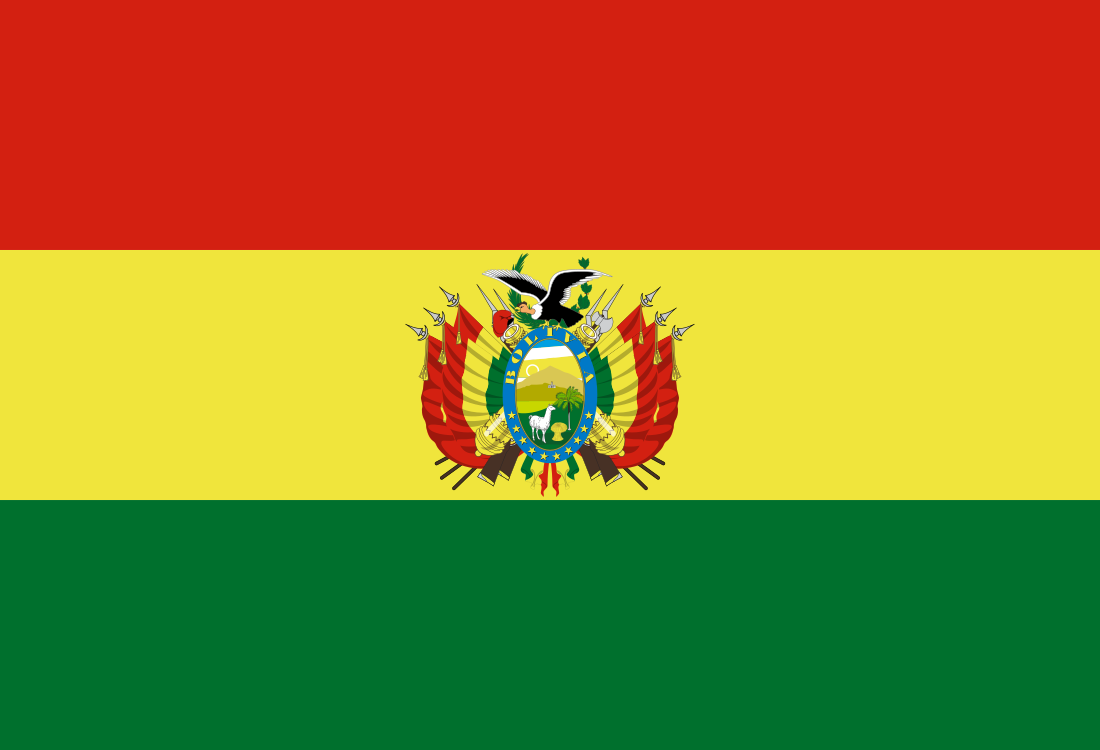
Bolivia's Cars Must Carry a Warning Triangle in 2026
Data verified:
4 min readBolivia drives on the right side of the road. The minimum driving age is 18. The general emergency number is 911. The legal blood alcohol limit is 0.05% BAC. Foreign drivers should carry an International Driving Permit (IDP) alongside their valid national licence.
Bolivia drives on the right. Traffic rules differ from what you may be used to at home. Use our penalty calculator and printable checklist below.
Enforcement in Bolivia runs moderate and police typically allow 5 km/h over the posted limit — go 20 km/h over and you pay a fixed roadside fine. Tourists get caught most often on the motorway corridor near Sucre.
Personalise for Your Trip
See how Bolivia differs from your home country
Watch: Driving in Bolivia
Driving in La Paz, Bolivia · Seiklevad Suitsupääsukesed
Bolivia has little true motorway infrastructure, so the 80 km/h rural limit applies on most of the country’s main highways, falling to 40 km/h in towns. The blood alcohol limit is 0.05%, and the minimum driving age is 18. Cars must carry a warning triangle, a reflective vest and a first aid kit — all mandatory, not optional extras.
The blood alcohol limit is 0.05% BAC. You must be at least 18 to drive.
🛣️ Plan your toll: Vignette Calculator — Austria, Switzerland, Slovakia, Czech, Hungary, Slovenia, Romania pricing.
🛞 Check your car: Emission Zone Checker — instant verdict for 596 European emission zones, free.
💡 Try it yourself: World Speed Limit Map — Bolivia’s limits by road type, next to 194 other countries, free.
Bolivia drives on the right. If you are arriving from Suriname (which drives on the left), be especially careful during your first hours on the road.
Emergency Numbers in Bolivia
General Emergency: 911 | Police: 911
Save these numbers before you start driving. In Bolivia, emergency calls are free from any phone.
Speed Limits in Bolivia
The default speed limits for passenger cars in Bolivia are 40 km/h in built-up areas, 80 km/h on rural roads, and there are no motorways. Note: Limited motorway infrastructure; rural speed limits apply on most highways.
Important: Posted signs always override default limits. Watch for temporary restrictions in construction zones, near schools, and in residential areas.
Speeding Fines and Penalties
Speeding fines in Bolivia vary based on how much you exceed the posted limit. Fines increase sharply for higher violations and may include licence points or driving bans for serious offences.
Traffic Rules and Regulations
Drive on the right side of the road. Overtake on the left. At roundabouts, enter counter-clockwise and yield to traffic already circulating.
Seatbelts are mandatory for all occupants. Children must use appropriate restraint systems based on their age and height.
Using a hand-held phone while driving is prohibited. Hands-free systems are permitted.
Use headlights in poor visibility, tunnels, and at night. Some areas require headlights at all times.
At unmarked intersections, traffic from the right generally has priority unless signs indicate otherwise.
Drink-Driving Laws and Alcohol Limits
The legal blood alcohol limit in Bolivia is 0.05% BAC. This is higher than Chile (0.03% BAC). Exceeding this limit results in fines, licence suspension, and possible criminal charges. For novice drivers and professional drivers, stricter limits may apply.
The safest approach is to not drink at all if you will be driving. Alcohol affects reaction time and judgement regardless of the legal limit.
Tyre Requirements and Regulations
Winter tyres are not required in Bolivia. Standard tyres are sufficient for normal driving conditions.
The legal minimum tread depth is 1.6 mm.
Studded tyres: restricted.
For detailed tyre law information, see our Tyre Laws in Bolivia guide.
Mandatory Vehicle Equipment
Vehicles in Bolivia must carry the following:
Required:
- Warning triangle
- Reflective vest (high-visibility)
- First aid kit
- Fire extinguisher
Keep all equipment accessible — not buried under luggage. Police may check during routine stops.
Driving License Requirements
Always carry your original driving licence — photocopies are not accepted.
The minimum driving age is 18 years.
Parking and Fuel
Parking rules vary by city. Look for designated parking areas and always check signs for time limits and payment requirements.
Current fuel prices in Bolivia: petrol approximately $0.54/litre, diesel $0.50/litre (USD). Prices vary by region and station.
Most fuel stations accept major credit and debit cards. In rural areas, keep your tank above half — stations may be far apart.
Seasonal Driving Conditions
Bolivia has a diverse climate from tropical to temperate. Conditions vary greatly by region — from tropical heat in the north to cooler temperatures in the south. Heavy rain can make roads dangerous. In mountainous areas, fog and altitude changes require extra caution.
Plan your journey according to regional weather patterns and avoid driving at night on unfamiliar rural roads.
Useful Driving Phrases in Spanish
Knowing a few phrases in Spanish helps at fuel stations, toll booths, and during police checks:
| English | Spanish |
|---|---|
| Where is the nearest petrol station? | ¿Dónde está la gasolinera más cercana? |
| I need help / roadside assistance | Necesito ayuda / asistencia en carretera |
| Where can I park? | ¿Dónde puedo aparcar? |
| How do I get to the motorway? | ¿Cómo llego a la autopista? |
| I had an accident | He tenido un accidente |
| Speed limit | Límite de velocidad |
| No parking | Prohibido aparcar |
| One way street | Calle de sentido único |
| Toll road | Autopista de peaje |
| Fill up the tank, please | Lleno, por favor |
Download the Spanish language pack in your translation app for offline use.
Practical Driving Tips for Bolivia
- Download offline maps of Bolivia before your trip — mobile signal can be unreliable on rural roads.
- Take a break every 2 hours on long drives. Fatigue is a leading cause of road accidents.
- Use our interactive tools on this page — compare rules with your home country and calculate potential fines before you set off.
Related tools
Speed Limits in Bolivia
| Road Type | Cars | Trucks (>3.5t) |
|---|---|---|
| Urban | 40 km/h | 40 km/h |
| Rural | 80 km/h | 70 km/h |
| Motorway | Limited motorway infrastructure; rural speed limits apply on most highways | — |
Note: Limited motorway infrastructure; rural speed limits apply on most highways
Useful Driving Phrases in Spanish
| English | Spanish |
|---|---|
| Where is the nearest petrol station? | ¿Dónde está la gasolinera más cercana? |
| I need help / roadside assistance | Necesito ayuda / asistencia en carretera |
| Where can I park? | ¿Dónde puedo aparcar? |
| How do I get to the motorway? | ¿Cómo llego a la autopista? |
| I had an accident | He tenido un accidente |
| Speed limit | Límite de velocidad |
| No parking | Prohibido aparcar |
| One way street | Calle de sentido único |
| Toll road | Autopista de peaje |
| Fill up the tank, please | Lleno, por favor |
Mandatory Equipment in Bolivia
Emergency Numbers in Bolivia
These numbers are free to call and available 24/7. When calling, state your location and the nature of the emergency.
Tyre Laws in Bolivia
Winter tyre requirements, tread depth rules, and studded tyre regulations.
View tyre regulationsAvoid a fine in Bolivia
Who pays a driving fine abroad, the hire-car admin-fee trap, and how to appeal.
Read the fine guideDriving in Bolivia on a foreign licence
Nationality-specific licence, IDP & rules — pick where your licence is from:
Renting a Car in Bolivia?
Compare prices from all major rental companies. Free cancellation on most bookings.
Compare Car Rental PricesSome links on this page are affiliate links. We may earn a commission at no extra cost to you. Learn more.
Recent changes to this page
- Title and description tightened to the page's own data (title 50-60, description 140-155 characters).
- Title, description and introduction rewritten from this page's own data (no shared template wording).
- Replaced the speeding-fine calculator link: that tool covers 17 countries and Bolivia is not one of them, so the link could not answer the question it promised. It now points to the speed-limit map, which does cover Bolivia.
Frequently Asked Questions
In Bolivia, the default speed limits for passenger vehicles are: urban areas 40 km/h (25 mph), rural roads 80 km/h (50 mph), and motorways 110 km/h (68 mph). Always follow posted signs as limits may differ on specific roads.
In Bolivia, traffic drives on the right side of the road. Vehicles have the steering wheel on the left side. If you are visiting from a country that drives on the left, take extra care at intersections, roundabouts, and when overtaking.
The legal blood alcohol concentration (BAC) limit in Bolivia is 0.05% (0.5mg/ml). Stricter limits often apply to novice drivers and commercial vehicle operators. Penalties for exceeding the limit can include heavy fines, license suspension, and imprisonment.
Foreign visitors to Bolivia should carry an International Driving Permit alongside their valid national driving license. An IDP translates your license into multiple languages and is recognized internationally. Check with the embassy of Bolivia for the most current requirements.
Winter tyres in Bolivia are: Not Required. Regardless of legal requirements, winter tyres or all-season tyres with the appropriate markings (M+S or 3PMSF) are strongly recommended when temperatures drop below 7°C for improved safety and grip.
The general emergency number in Bolivia is 911. These numbers are free to call and available 24/7. When calling, be prepared to state your location and the nature of the emergency.
Using a hand-held mobile phone while driving is prohibited in Bolivia. Hands-free systems (Bluetooth, speakerphone, or mounted devices) are permitted. Penalties for mobile phone use while driving typically include fines. For safety, always use hands-free solutions or pull over to use your phone.
When driving in Bolivia, you should always carry: your valid driving license (and IDP if applicable), vehicle registration document, valid insurance certificate (Green Card for European countries), and your passport or national ID. Rental car drivers should also carry the rental agreement. Police may request these documents during routine checks.
The minimum age to drive a car in Bolivia is 18 years old. Some categories of vehicles (such as motorcycles or heavy vehicles) may have different age requirements. Novice drivers may face additional restrictions during their first years of driving.
Driving in Bolivia is generally safe for tourists who are prepared. Road infrastructure follows South American standards. Before driving, familiarize yourself with local traffic rules, road signs, and driving customs. Consider downloading offline maps, carrying emergency supplies, and purchasing comprehensive insurance. Avoid driving at night in unfamiliar areas if possible.
Get Driving Law Updates
Speed limits, fines and tyre laws change frequently. Get monthly updates for the countries you drive in.
Related Articles
Dashcam Bans 2026: Austria Can Fine You EUR 10,000
Austrian privacy law makes filming the road effectively illegal, Luxembourg bans them in private cars, and German courts have taken footage since 2018.
Driving LawsEurope Speeding Fines 2026: EUR 15 to an Uncapped Day-Fine
The same 20 km/h over the limit costs EUR 15 at the cheap end and EUR 70 on a German Autobahn, and in Switzerland a share of income with no ceiling.
Driving LawsRadar Detectors in Europe 2026 — €1,500 Fine in France
France seizes the device and fines €1,500 plus six licence points; Germany charges €75 for using one, and Waze camera alerts are unlawful in two countries.
Explore Guides
How Bolivia compares worldwide
Bolivia Tyre Laws
Winter tyres, tread depth & tyre regulations
 Argentina
 Brazil
 Chile
Chile Colombia
 Ecuador
 Guyana