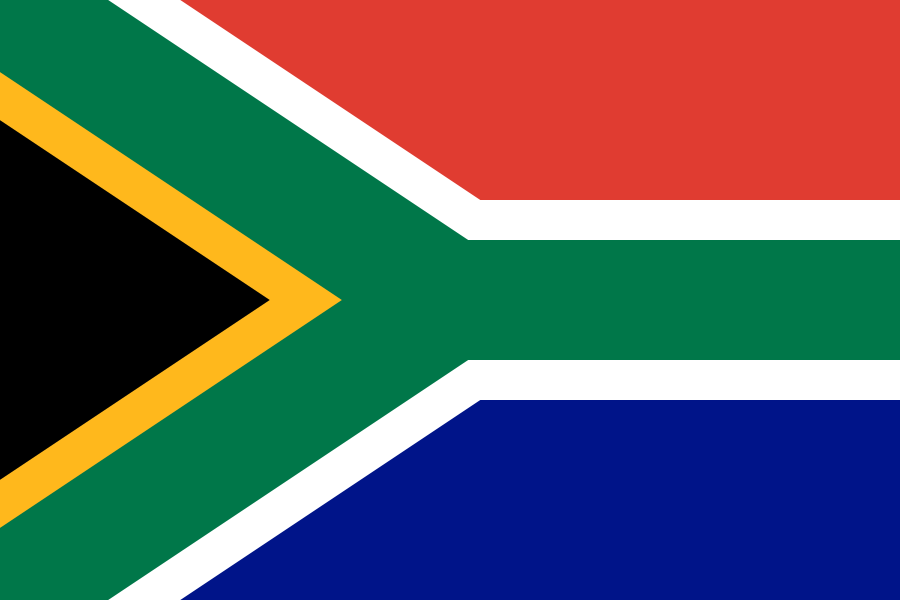
 South Africa
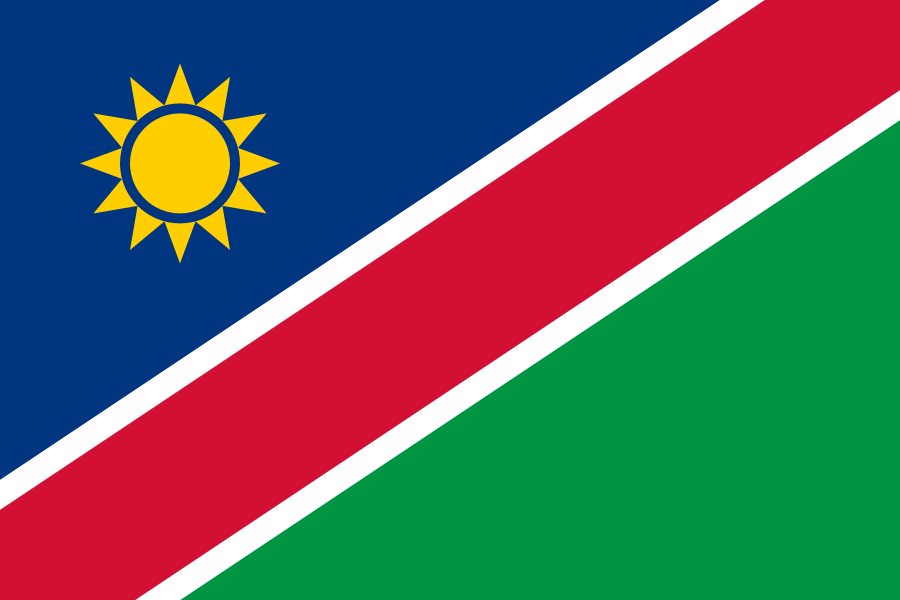 Namibia
South Africa vs Namibia: Driving Rules Compared
Data verified:
8 min readKey differences between South Africa and Namibia for drivers: Motorway: South Africa 120 km/h vs Namibia 100 km/h. Both drive on the left. Both have a 0.05 g/L BAC limit. Urban speed limit: South Africa 60 km/h, Namibia 50 km/h.
South Africa sets its legal minimum tyre tread depth at just 1.0mm, thinner than the 1.6mm standard used across the border in Namibia. Motorway limits differ too, 120 km/h in South Africa against 100 km/h in Namibia. Both share the same 0.05 g/L drink-drive limit and left-hand traffic, so the tread rule and the motorway sign are what actually change.
Both countries drive on the left side of the road, which means drivers from one country will feel immediately comfortable in the other.
Speed Limits Comparison
Speed limits differ notably between South Africa and Namibia, reflecting their different road environments.
In South Africa, the standard speed limits are 60 km/h in urban areas, 100 km/h on rural roads, and 120 km/h on motorways (freeways). South Africa has a well-developed motorway network, particularly around Johannesburg, Cape Town, and Durban. The N1, N2, and N3 national routes are major arteries. Speed enforcement includes speed cameras and traffic police, though compliance varies.
In Namibia, the limits are 50 km/h in urban areas, 80 km/h on rural roads, and 100 km/h on main paved roads (Namibia has limited motorway-grade roads). Namibia is characterised by long, straight gravel roads through sparsely populated landscapes. The B1 and B2 are the main paved highways connecting Windhoek to the coast and to the South African border.
Key Speed Limit Differences
| Road Type | South Africa | Namibia |
|---|---|---|
| Urban / City | 60 km/h | 50 km/h |
| Rural / Country Roads | 100 km/h | 80 km/h |
| Motorway / Highway | 120 km/h | 100 km/h |
South Africa allows higher speeds across all road types. This is an important adjustment for drivers heading from South Africa into Namibia, where lower limits reflect the more challenging road conditions and the prevalence of gravel roads.
Traffic Rules and Regulations
Driving side: Both South Africa and Namibia drive on the left. The transition is seamless.
Minimum driving age: The minimum age to drive a car is 18 in both countries. In South Africa, a provisional licence (learner’s permit) is obtainable from age 17.
Headlights: It is recommended to drive with headlights on at all times in both countries, especially on long rural roads where dust can reduce visibility.
Mobile phone use: Using a handheld mobile phone while driving is illegal in both countries. Enforcement varies, particularly in rural areas.
Seatbelts: Seatbelts are mandatory for all occupants in both South Africa and Namibia.
Running a red light: Red-light violations carry penalties in both countries, though urban traffic lights are more common in South Africa than in Namibia, where many intersections use stop signs.
Gravel roads: Namibia has an extensive gravel road network. When driving on gravel, reduce speed significantly, maintain a safe following distance to avoid stone damage, and be cautious at corners. Rental agreements in both countries may restrict which roads you can drive on.
Alcohol and DUI Laws
South Africa enforces a BAC limit of 0.05%. Drink-driving is a serious problem on South African roads, and enforcement has been increasing, especially during holiday periods with roadblocks.
Namibia also sets its BAC limit at 0.05%. The same standard applies.
Both countries share the same BAC limit. Penalties include fines, licence suspension, and imprisonment. Given the long distances and isolated roads in both countries, driving under the influence is particularly dangerous and should be avoided completely.
Tyre and Equipment Requirements
Winter Tyres
Winter tyres are not a major concern in either South Africa or Namibia, as neither country has mandatory winter tyre requirements. However, tyre condition is critical.
- South Africa: Winter tyres are not required. Minimum tread depth is 1.0 mm (legal minimum). All-season tyres are standard.
- Namibia: Winter tyres are not required. Minimum tread depth is 1.6 mm. All-season tyres are standard.
For both countries, good tyre condition is essential, especially on gravel roads where punctures are common. Carrying two spare tyres when driving on Namibian gravel roads is strongly recommended.
Mandatory Equipment
| Item | South Africa | Namibia |
|---|---|---|
| Warning Triangle | Recommended | Recommended |
| Reflective Vest | Recommended | Recommended |
| First Aid Kit | Recommended | Recommended |
| Fire Extinguisher | Recommended | Recommended |
| Spare Tyre | Strongly recommended | Essential (carry two) |
| Tyre Repair Kit | Recommended | Strongly recommended |
Neither country has extensive mandatory equipment requirements by law, but practical considerations make preparation essential, especially for travel in Namibia where assistance can be hours away.
Speeding Penalties
In South Africa, speeding penalties vary by province and the degree of the offence. Fines typically start from ZAR 500 (approx. EUR 25) for minor offences and increase substantially for higher speeds. Serious offenders face licence suspension and court appearances. South Africa uses fixed speed cameras, mobile units, and average speed cameras on some routes.
In Namibia, speeding fines are lower in absolute terms but are enforced, particularly on paved roads near towns. Police roadblocks are common on major routes. Fines are typically payable on the spot or at a nearby police station.
Licence Requirements for Visitors
South Africa: An IDP is required if your licence is not in English. Foreign licences in English with a photo are accepted for up to 12 months. Drives on the left.
Namibia: A foreign licence is valid if in English with a photo. IDP recommended if your licence does not meet these criteria. Valid for 12 months.
Always carry your licence and IDP while driving. Roadblocks are common in both countries, and police will check documents.
Road Conditions and Infrastructure
South Africa
South Africa has the most developed road network in Africa, with well-maintained motorways and national routes. The N1 (Johannesburg to Cape Town), N2 (coastal route), and N3 (Johannesburg to Durban) are key arteries. Urban traffic congestion can be severe in Johannesburg and Cape Town. Some rural roads, particularly in the Eastern Cape and Limpopo, may be poorly maintained. Car hijacking is a concern in certain areas; keep windows closed and doors locked in urban areas.
Namibia
Namibia has approximately 48,000 km of roads, but only about 8,000 km are paved. Gravel roads are generally well-maintained but require reduced speed and caution. The main paved routes (B1, B2, B6) are good quality. Distances between towns are vast, and fuel stations can be far apart. Wildlife on roads (particularly at night) is a serious hazard. Carry extra water, fuel, and supplies when driving in remote areas.
Emergency Numbers
| Service | South Africa | Namibia |
|---|---|---|
| Police | 10111 | 112 |
| Ambulance | 10177 | 112 |
| Fire | 10177 | 112 |
| General Emergency | 112 | 112 |
Save these numbers before your trip. Mobile phone coverage can be patchy in rural areas of both countries.
Practical Tips for Driving in Both Countries
Carry extra supplies. Water, fuel, food, and spare tyres are essential for long-distance drives in both countries, especially in Namibia.
Avoid night driving. Both countries have hazards at night: wildlife on roads in Namibia, and security concerns in parts of South Africa. Plan to reach your destination before dark.
Check rental car restrictions. Many rental companies restrict driving on gravel roads or require a 4x4 for certain routes in Namibia. Verify your rental agreement carefully.
Fill up at every fuel station in Namibia. Fuel stations can be over 200 km apart in remote areas. Never pass a fuel station with less than half a tank.
Watch for livestock and wildlife. Animals on the road are a common hazard in both countries, from cattle in South Africa to kudu and oryx in Namibia.
Be prepared for police roadblocks. Both countries have regular police checkpoints. Have your documents ready and be cooperative.
Reduce speed on gravel. Gravel roads in Namibia require speeds of 60-80 km/h at most. Slow down further for oncoming vehicles and corners.
Use reliable navigation. Download offline maps before travelling, as mobile coverage is limited in many areas.
Which Country Is Easier for Tourists to Drive In?
For most international tourists, South Africa is easier to drive in because of its more developed infrastructure, better road surfaces, and more familiar driving environment (traffic lights, lane markings, motorways). However, tourists should be aware of security concerns in certain areas.
Namibia offers one of Africa’s greatest road trip experiences with its vast landscapes and empty roads, but it requires more preparation and self-sufficiency. Gravel road driving is a skill that takes some adjustment, and distances are vast with limited services.
Both countries drive on the left, which is familiar for visitors from the UK, Australia, Japan, and other left-driving nations. Drivers from right-hand-traffic countries will need to adjust carefully, especially at intersections and roundabouts.
Frequently Asked Questions
Can I drive in Namibia with a South African driving licence?
Yes. South African driving licences are generally accepted in Namibia, as they include English text and a photo. An IDP is an additional safeguard.
What is the speed limit on highways in South Africa compared to Namibia?
The highway speed limit in South Africa is 120 km/h, while in Namibia it is 100 km/h on paved roads. Gravel roads in Namibia have lower limits of 80 km/h or less.
Are winter tyres needed in South Africa or Namibia?
Neither country requires winter tyres. However, good-quality all-season tyres with adequate tread depth are essential. In Namibia, tyre punctures on gravel roads are common, so carry spare tyres and a repair kit.
Which country has stricter drink-driving laws?
Both countries have a BAC limit of 0.05%. South Africa has been increasing enforcement with roadblocks, particularly during holiday periods. Always avoid alcohol before driving.
Do I need a 4x4 in Namibia?
Not always, but a 4x4 is recommended for many routes, especially in the north (Etosha area), Sossusvlei, and during the rainy season. Check with your car rental company which routes require a 4x4.
What side of the road do they drive on in South Africa and Namibia?
Both South Africa and Namibia drive on the left side of the road.
Is it safe to drive at night in South Africa and Namibia?
Night driving is not recommended in either country. In Namibia, wildlife on the road is a serious hazard. In South Africa, security concerns and unlit rural roads make night driving risky.
What emergency number should I call while driving in South Africa or Namibia?
In South Africa, call 10111 for police and 10177 for ambulance and fire services. In Namibia, call 112 for all emergencies. The number 112 also works in South Africa for mobile calls.
| Category | South Africa | Namibia |
|---|---|---|
| Driving Side | Left | Left |
| Urban Speed Limit | 60 km/h | 50 km/h |
| Rural Speed Limit | 100 km/h | 80 km/h |
| Motorway Limit | 120 km/h | 100 km/h |
| Alcohol Limit | 0.05% | 0.05% |
| Driving Age | 18 | 18 |
| Winter Tyres | Not required | Not required |
| Studded Tyres | Not Applicable | Not Applicable |
| Warning Triangle | ✅ | — |
| Reflective Vest | ✅ | — |
| First Aid Kit | ✅ | — |
| Fire Extinguisher | ✅ | — |
| Breathalyzer | ❌ | — |
| Min Tread Depth | 1 mm | 1.6 mm |
| IDP Required | Required | Recommended |
| EU Licence Valid | ✅ | ✅ |
| Max Stay (Months) | 12 | 12 |
| Emergency Number | 112 | 112 |
Driving Strictness Score
Based on BAC limits, required equipment, winter tyre laws, penalties, and enforcement
South Africa
NamibiaRenting a Car?
Compare prices from all major rental companies. Free cancellation on most bookings.
Compare Car Rental PricesSome links on this page are affiliate links. We may earn a commission at no extra cost to you. Learn more.
Driving in South Africa
Complete guide with speed limits, rules & tips
Driving in Namibia
Complete guide with speed limits, rules & tips
South Africa Tyre Laws
Winter tyres, tread depth & regulations
Namibia Tyre Laws
Winter tyres, tread depth & regulations