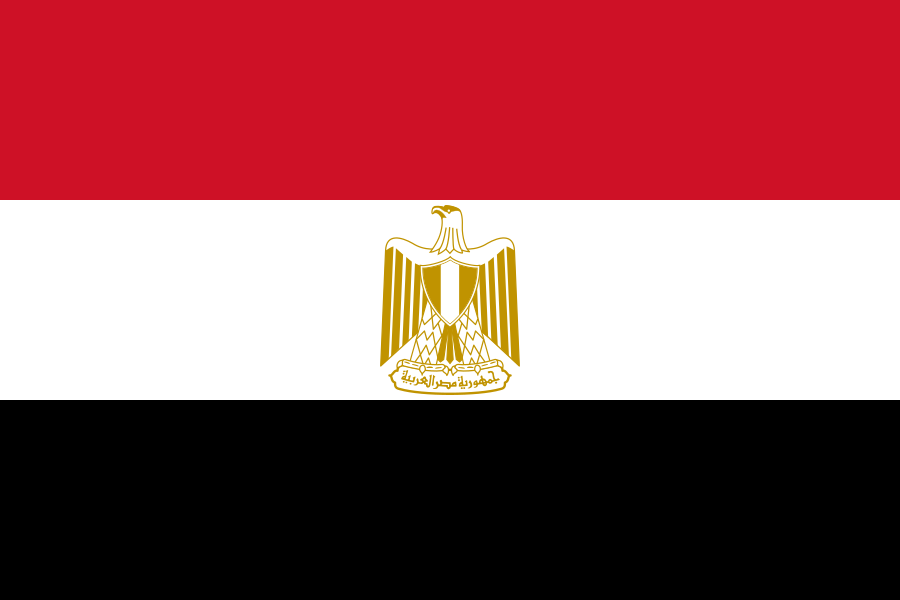
 Egypt
Egypt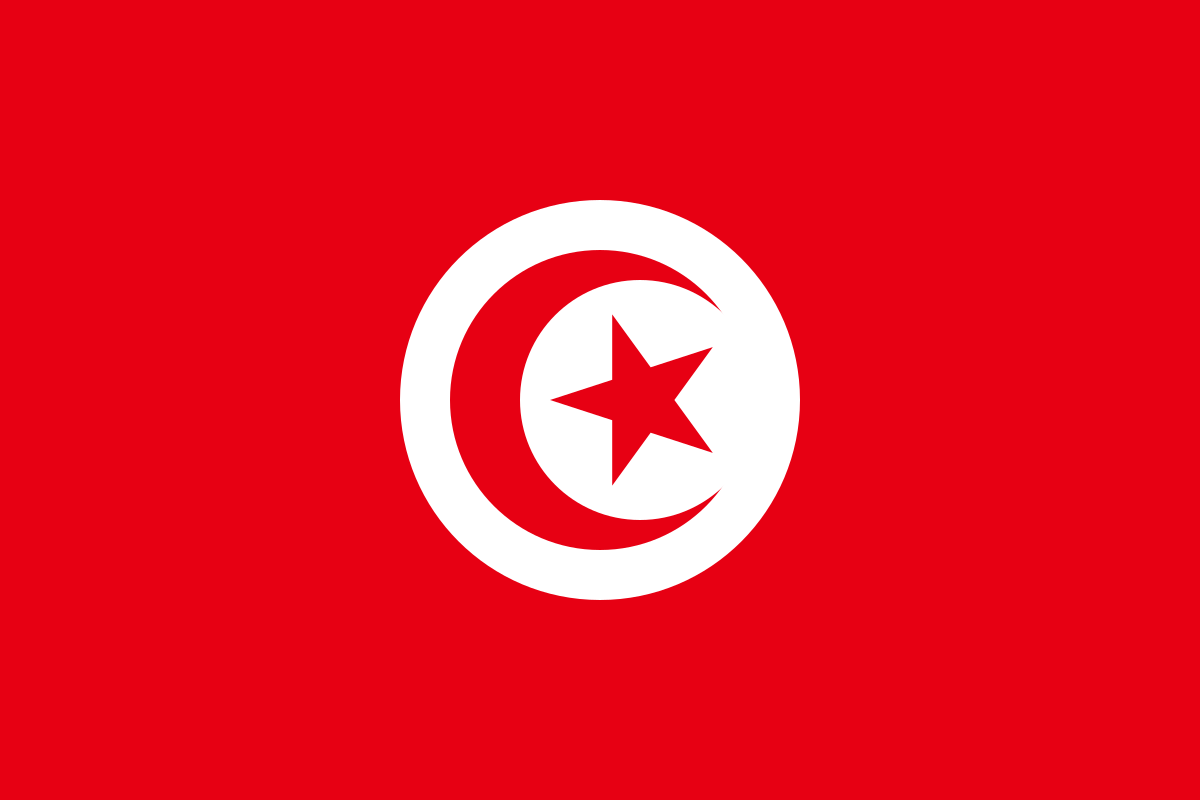 Tunisia
Egypt vs Tunisia: Driving Rules Compared
Data verified:
5 min readKey differences between Egypt and Tunisia for drivers: Motorway: Egypt 100 km/h vs Tunisia 110 km/h. Both drive on the right. Drink-driving limit: Egypt 0 g/L (zero tolerance), Tunisia 0.03 g/L. Urban speed limit: Egypt 60 km/h, Tunisia 50 km/h.
Egypt treats any measurable alcohol as a violation, setting the limit at 0.0, while neighbouring Tunisia permits up to 0.03 g/L. Motorway speeds favour Tunisia slightly, at 110 km/h against Egypt’s 100. Tunisia also expects drivers to carry a reflective vest, a requirement Egypt does not enforce.
Speed Limits Comparison
💡 Try it yourself: World Speed Limit Map — Egypt and Tunisia side by side with 193 other countries, free.
Speed limits differ between the two countries, with Tunisia generally enforcing more structured limits while Egypt has broader ranges that vary by road type.
| Road Type | Egypt | Tunisia |
|---|---|---|
| Urban / City | 50 km/h | 50 km/h |
| Rural / Country Roads | 90 km/h | 90 km/h |
| Motorway / Highway | 100-120 km/h | 110 km/h |
Egypt has a growing motorway network, including the Cairo-Alexandria Desert Road and the new Rod El Farag Axis. Speed limits on motorways reach 120 km/h, but chaotic traffic in cities like Cairo makes actual speeds much lower than posted limits. Speed cameras are increasingly common on main highways. Tunisia has well-maintained autoroutes connecting Tunis to major cities like Sfax and Sousse. Speed limits are clearly posted and enforcement through radar is more consistent than in Egypt. Tunisia’s autoroutes have a standard 110 km/h limit.
Driving Side
Both Egypt and Tunisia drive on the right side of the road, with left-hand-drive vehicles. Drivers from Europe, the Americas, or other right-hand-traffic countries will feel at home. Those from the UK, Australia, or Japan should take extra care when turning and at roundabouts.
Alcohol Limits
Egypt has no officially standardized BAC limit published in most sources, but alcohol consumption is culturally discouraged as a Muslim-majority country. Driving under the influence of alcohol is a criminal offence and can result in severe penalties. Tunisia enforces a BAC limit of 0.03%, which is extremely strict and effectively means zero tolerance for any meaningful alcohol consumption before driving.
In both countries, drink-driving can lead to heavy fines, licence confiscation, and imprisonment. Given the cultural and legal sensitivities around alcohol in both nations, the safest approach is to abstain entirely from alcohol before driving.
Tyre and Equipment Requirements
Tyre Rules
| Requirement | Egypt | Tunisia |
|---|---|---|
| Winter Tyres | Not required | Not required |
| Minimum Tread Depth | 1.6 mm | 1.6 mm |
| Studded Tyres | Not applicable | Not applicable |
| All-Season Tyres | Standard | Standard |
Neither country requires winter tyres. The hot, dry climate of both nations means standard all-season tyres are suitable year-round. However, desert driving (particularly in Egypt’s Western Desert or Tunisia’s Saharan south) demands tyres in excellent condition, and many tour operators recommend reducing tyre pressure for sand driving and carrying a compressor.
Mandatory Equipment Comparison
| Item | Egypt | Tunisia |
|---|---|---|
| Warning Triangle | Mandatory | Mandatory |
| Reflective Vest | Recommended | Mandatory |
| First Aid Kit | Recommended | Recommended |
| Fire Extinguisher | Recommended | Mandatory |
| Spare Tyre | Strongly recommended | Strongly recommended |
| Seatbelts | Mandatory | Mandatory |
Tunisia has stricter mandatory equipment requirements than Egypt, including a reflective vest and fire extinguisher that must be carried in the vehicle at all times. Both countries require a warning triangle. When driving in desert areas in either country, carrying extra water, a spare tyre, and basic tools is essential.
Emergency Numbers
| Service | Egypt | Tunisia |
|---|---|---|
| Police | 122 | 112 |
| Ambulance | 123 | 112 |
| Fire | 180 | 112 |
| General Emergency | 122 | 112 |
Egypt uses separate numbers for each service, with 122 for police being the most commonly used. Tunisia uses the unified European-style 112 number for all emergencies. Response times in both countries can vary, particularly in rural and desert areas.
Penalties Overview
- Egypt: Speeding fines range from EGP 300-1,500 (approximately USD 6-30). Traffic violations are generally handled through fines, though serious offences can result in licence suspension. Recent traffic law reforms have increased penalties for mobile phone use and seatbelt violations.
- Tunisia: Speeding fines range from TND 20-120 (approximately USD 6-38). More serious offences carry fines up to TND 500 and potential imprisonment. Tunisia has a stricter enforcement culture, particularly on autoroutes, with regular police checkpoints.
Mobile phone use while driving is prohibited in both countries, with fines applied for violations.
International Driving Permit
An International Driving Permit (IDP) is strongly recommended for foreign visitors to both countries:
- Egypt: An IDP is required for foreign drivers. Egyptian police regularly check documents at checkpoints, particularly in tourist areas and when leaving cities. Your IDP must be accompanied by your original national licence.
- Tunisia: An IDP is required for stays exceeding one month, but is recommended for all foreign drivers. For shorter visits, a valid foreign licence may be accepted by rental agencies, though an IDP provides added legal protection.
Practical Tips
- Driving in Cairo is intense. Egyptian capital traffic is famously chaotic, with lane markings treated as suggestions and horn use constant. Consider hiring a driver for Cairo and self-driving only for intercity travel.
- Police checkpoints are frequent. Both countries have regular police and military checkpoints, especially near borders, tourist sites, and desert roads. Always carry your passport, licence, IDP, and vehicle documents.
- Desert driving requires preparation. If venturing into the Sahara (either country), inform someone of your route, carry ample water and fuel, and consider a GPS device. Mobile coverage is spotty in remote areas.
- Toll roads. Tunisia has a toll autoroute system. Egypt’s newer highways also have tolls. Carry local currency for toll payments.
- Night driving. Avoid driving at night in rural areas of both countries. Poorly lit roads, unmarked obstacles, and pedestrians/livestock on the road create significant hazards.
For detailed country-specific information, visit driving in Egypt and driving in Tunisia.
| Category | Egypt | Tunisia |
|---|---|---|
| Driving Side | Right | Right |
| Urban Speed Limit | 60 km/h | 50 km/h |
| Rural Speed Limit | 90 km/h | 90 km/h |
| Motorway Limit | 100 km/h | 110 km/h |
| Alcohol Limit | — | 0.03% |
| Driving Age | 18 | 18 |
| Winter Tyres | Not required | Not required |
| Studded Tyres | Not Applicable | Not Applicable |
| Warning Triangle | ✅ | ✅ |
| Reflective Vest | ❌ | ✅ |
| First Aid Kit | ✅ | ✅ |
| Fire Extinguisher | ✅ | ✅ |
| Breathalyzer | ❌ | ❌ |
| Min Tread Depth | 1.6 mm | 1.6 mm |
| IDP Required | Required | Recommended |
| EU Licence Valid | ❌ | ✅ |
| Max Stay (Months) | 3 | 12 |
| Emergency Number | 122 | 112 |
Driving Strictness Score
Based on BAC limits, required equipment, winter tyre laws, penalties, and enforcement
Egypt
TunisiaRenting a Car?
Compare prices from all major rental companies. Free cancellation on most bookings.
Compare Car Rental PricesSome links on this page are affiliate links. We may earn a commission at no extra cost to you. Learn more.
Driving in Egypt
Complete guide with speed limits, rules & tips
Driving in Tunisia
Complete guide with speed limits, rules & tips
Egypt Tyre Laws
Winter tyres, tread depth & regulations
Tunisia Tyre Laws
Winter tyres, tread depth & regulations