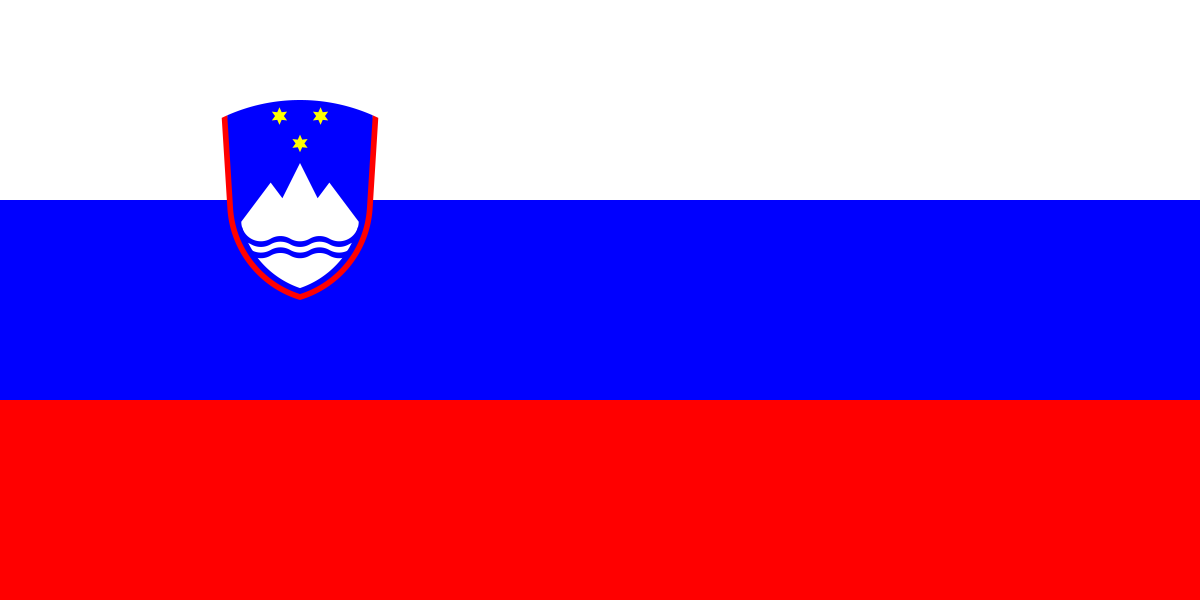
Slovenia on a Swedish Licence — Buy the Vignette Before You Drive
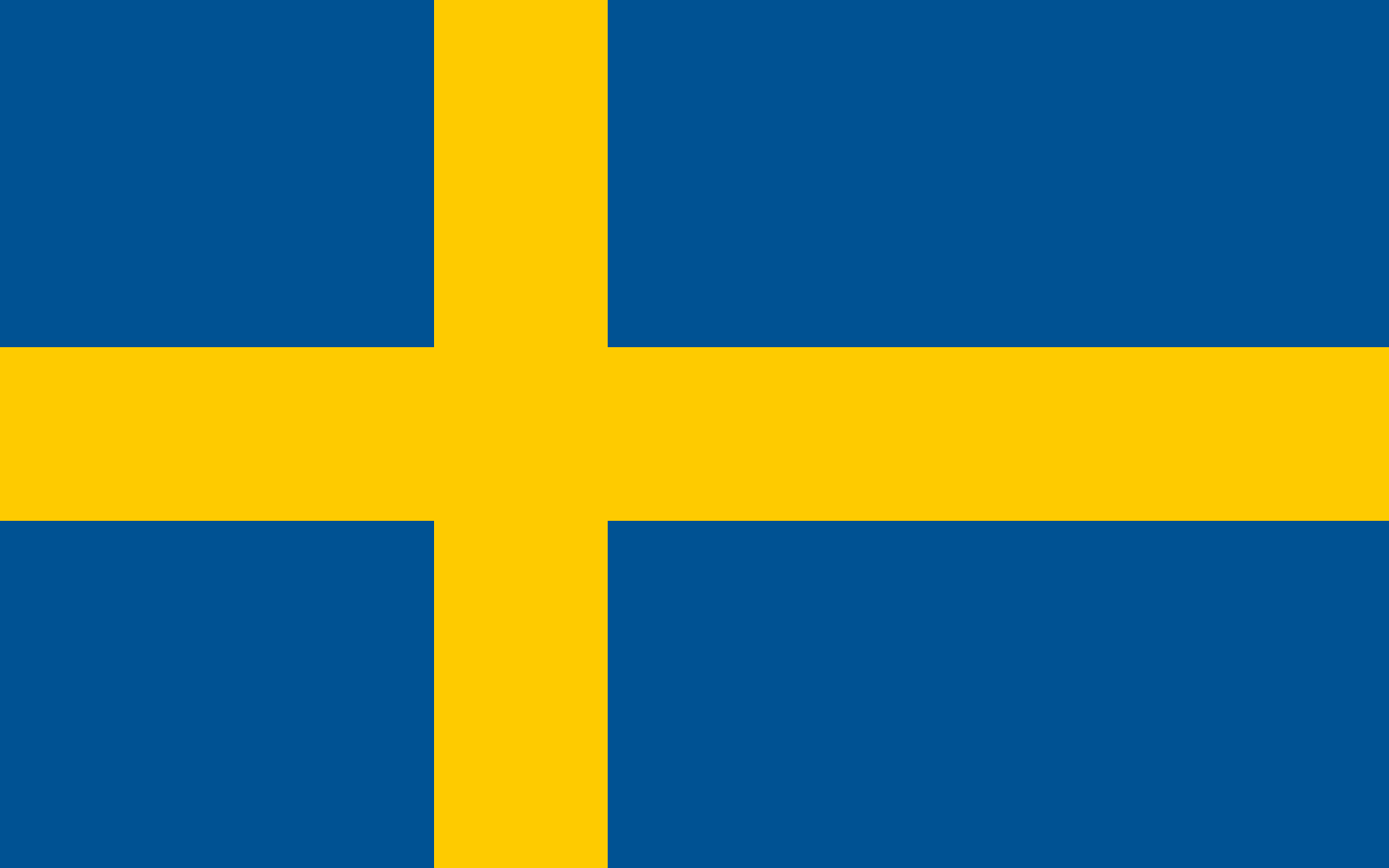 Sweden
Slovenia
Sweden
Slovenia
Your Swedish EU licence is fully valid in Slovenia, no IDP needed. The one thing that catches drivers is the motorway vignette — you need a digital e-vignette before you touch the A-roads, or you face a heavy on-the-spot fine. Traffic is on the right, like home, and the limit is 130 km/h.
For Swedish drivers, Slovenia is one of the easiest road trips in Europe — same side of the road, an EU licence that just works, and a country small enough to cross in an afternoon. The single thing that trips people up isn’t a driving rule at all. It’s a sticker you can’t see.
Sort the vignette before the motorway, not after
Slovenia charges for its motorways and expressways through a digital e-vignette — there are no toll booths, just number-plate cameras. The moment your wheels touch an A-road or H-road without one, you’re liable for a fine that dwarfs the vignette price. A weekly car vignette is roughly €16, a monthly one around €32. Buy it online before you leave, or stop at a petrol station near the Karawanks tunnel or the Austrian border and do it there. Hire cars usually come with one already loaded against the plate — confirm it at the desk so you’re not paying twice. Our Slovenia vignette guide walks through the exact options, and the vignette calculator sizes the cost to your trip length.
The road itself feels like home
Slovenia drives on the right, exactly as Sweden does, so there’s no side switch to unlearn — a rare comfort that makes this an easy first foreign drive. Motorways run at 130 km/h (above the 110 you’re used to), main roads at 90, and towns at 50. The roads are genuinely good: Slovenia’s network is modern and well-kept, and the scenic mountain routes through the Julian Alps are the reason most people come. Speeding fines for 10 km/h over land at €50-120, issued by fixed and mobile cameras alike.
A looser alcohol limit than you’d expect
Here’s a quiet surprise: Slovenia’s 0.05 BAC limit is actually more lenient than Sweden’s 0.02. Don’t read that as permission. Mountain roads, summer traffic and unfamiliar junctions are a poor mix with any alcohol, and penalties include fines and confiscation. Keep it at zero.
Beyond that, carry the usual warning triangle and hi-vis vest, dip your headlights day and night (it’s required), and save 112 for emergencies. For the full rule set, see our Slovenia driving guide before you set off.
Speed limits, fines, equipment & license requirements
Your home country driving rules for reference
Renting a Car?
Compare prices from all major rental companies. Free cancellation on most bookings.
Compare Car Rental PricesSome links on this page are affiliate links. We may earn a commission at no extra cost to you. How our affiliate links work.
More Free Tools
Explore TyreMap
Winter tyres in Slovenia — 2026–27 season
Winter tyres are compulsory on fixed dates in Slovenia: 15 Nov - 15 Mar.
- Legal winter tread minimum: 3 mm — not the 1.6 mm figure most guides quote, which is the year-round minimum.
- Accepted marking: M+S or 3PMSF (min 3 mm tread)
- Studded tyres: banned
- Penalty: EUR 125 (EUR 417 if the car causes an obstruction)
In Slovene the rule is zimske pnevmatike, and snow chains are snežne verige — that is the wording on signs, in hire-car paperwork and on any penalty notice.
Checked against national legislation, 19 Jun 2026 · Full Slovenia tyre law · Compare all countries
Frequently Asked Questions
Yes. Every motorway and expressway requires a digital e-vignette. A weekly one costs around EUR 16 for a car. Buy it online or at a border petrol station before you join the motorway — there is no toll booth, only camera checks.
Yes. As a Swedish EU licence holder you can drive in Slovenia with no International Driving Permit. Carry your licence, passport and vehicle papers.
Slovenia sets 0.05 BAC, higher than Sweden's strict 0.02. Even so, treat it as near-zero — penalties run to large fines and licence confiscation.