Slovenia on a Japanese Licence — The Side Switch, an IDP & the Vignette
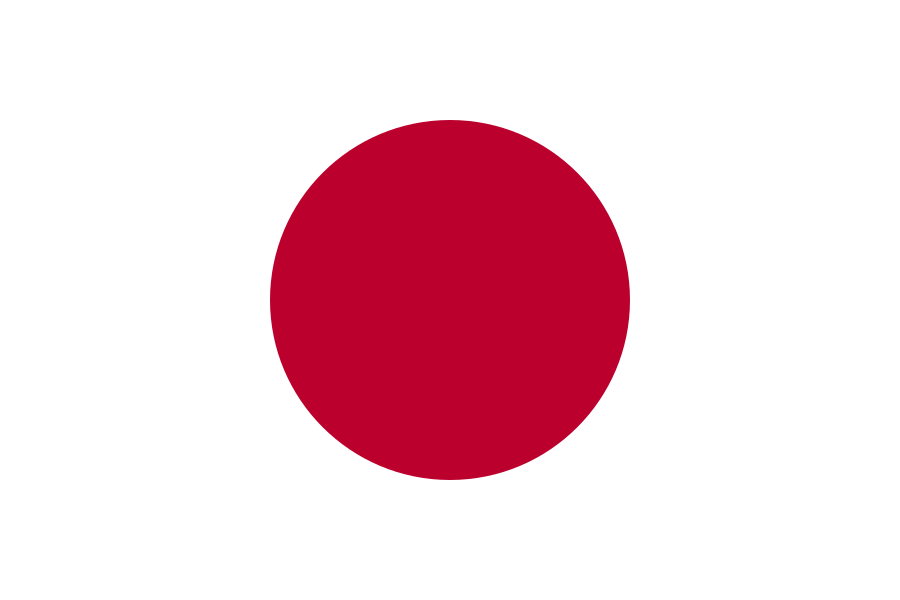 Japan
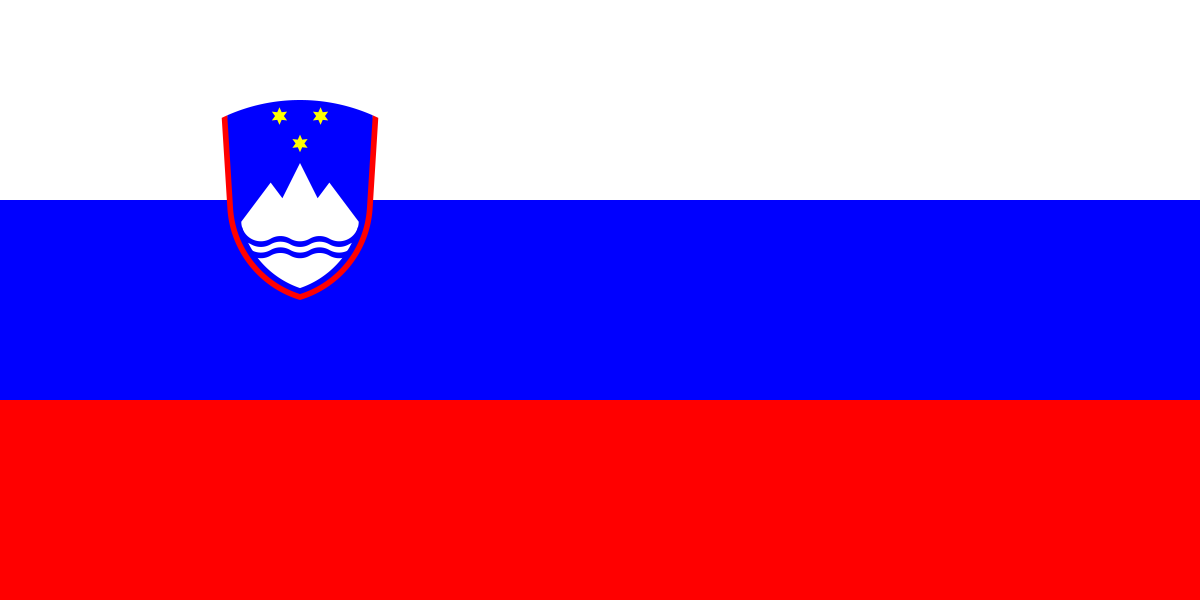
Slovenia
Japan
Slovenia
Japanese drivers in Slovenia need a Geneva-convention IDP with the Japanese licence, switch from left- to right-hand traffic, and must register an e-vignette before any motorway drive — skipping it costs hundreds of euros. The 0.05 alcohol limit is looser than Japan's strict 0.03 but still enforced.
Slovenia rewards Japanese travellers who hire a car — compact, alpine and coastal, with the kind of orderly traffic that feels closer to home than much of southern Europe. Three things shape the first day, and only one of them is a piece of paper.
Switching to the right is the main job
Japan drives on the left; Slovenia on the right. After years of left-hand driving this reversal is what genuinely catches people, and the danger window is the first day: pulling out of a fuel station, taking a roundabout that now flows the opposite way, or glancing the wrong direction at a junction. Collect the car and spend a quiet first hour away from Ljubljana traffic, staying deliberate at each turn until right-side driving feels natural.
The IDP and the vignette
Bring a Geneva-convention International Driving Permit obtained in Japan before departure — Slovenia recognises it, and desks and police expect to see it with your Japanese licence and passport. You cannot get one after arriving, so arrange it at home. Our driving permit checker confirms the detail.
The catch first-timers miss is the e-vignette (e-vinjeta). Slovenian motorways toll electronically with no booths, so you register your number plate online or at a petrol station before joining an A-road. A weekly car vignette is about EUR 16; reaching Bled or the coast without one brings a fine of several hundred euros. The Slovenia vignette guide walks through it.
Speeds and alcohol
Limits are 50 km/h in town, 90 rural and 130 on motorways — well above Japan’s 100 motorway ceiling, so the open road feels fast and the camera enforcement is strict, with a 10 km/h overspeed in the EUR 50-120 band. Slovenia’s 0.05 alcohol limit is looser than Japan’s near-zero stance, but checks are frequent and penalties harsh, so the no-drink habit you keep at home still serves you. 112 covers emergencies. Full rules are on our Slovenia driving guide.
Speed limits, fines, equipment & license requirements
Your home country driving rules for reference
Side-by-side driving rules comparison
Renting a Car?
Compare prices from all major rental companies. Free cancellation on most bookings.
Compare Car Rental PricesSome links on this page are affiliate links. We may earn a commission at no extra cost to you. How our affiliate links work.
More Free Tools
Explore TyreMap
Winter tyres in Slovenia — 2026–27 season
Winter tyres are compulsory on fixed dates in Slovenia: 15 Nov - 15 Mar.
- Legal winter tread minimum: 3 mm — not the 1.6 mm figure most guides quote, which is the year-round minimum.
- Accepted marking: M+S or 3PMSF (min 3 mm tread)
- Studded tyres: banned
- Penalty: EUR 125 (EUR 417 if the car causes an obstruction)
In Slovene the rule is zimske pnevmatike, and snow chains are snežne verige — that is the wording on signs, in hire-car paperwork and on any penalty notice.
Checked against national legislation, 19 Jun 2026 · Full Slovenia tyre law · Compare all countries
Frequently Asked Questions
Yes, with a Geneva-convention International Driving Permit obtained in Japan. Carry the IDP, your Japanese licence and passport together; rental desks and police expect the IDP.
The right. Japan drives on the left, so this is the biggest adjustment — take your first hour on quiet roads before a roundabout, which flows the opposite way.
Yes. Every motorway drive needs an e-vignette registered to your plate before you join the road. A weekly car vignette is about EUR 16; without one the fine runs into the hundreds of euros.