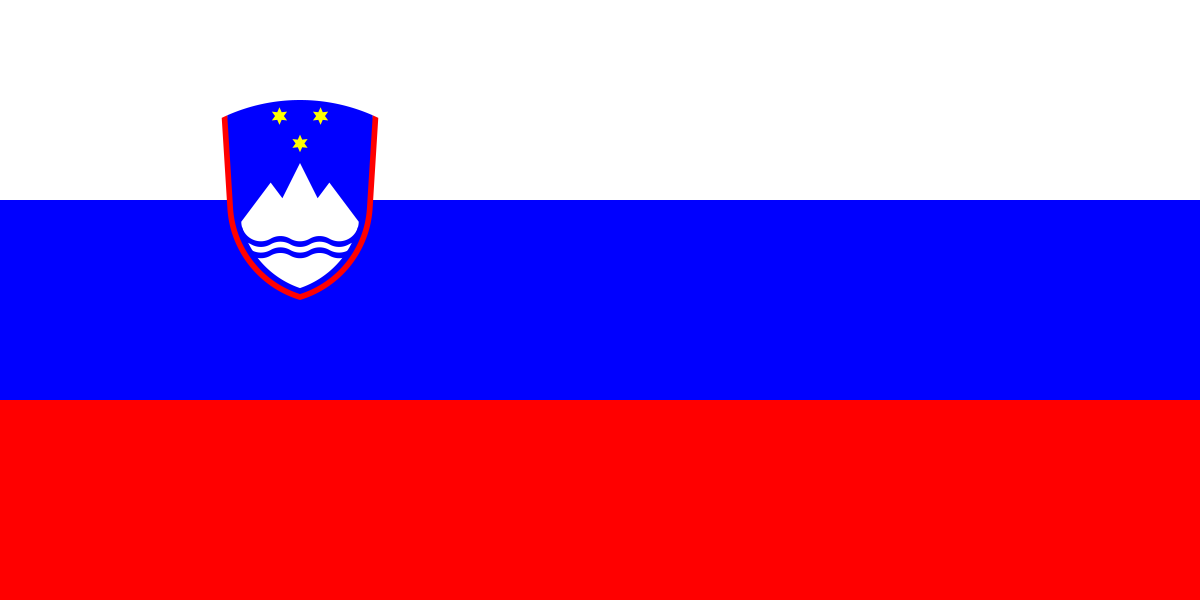
Slovenia from Germany — the Vignette Is the Only Real Catch
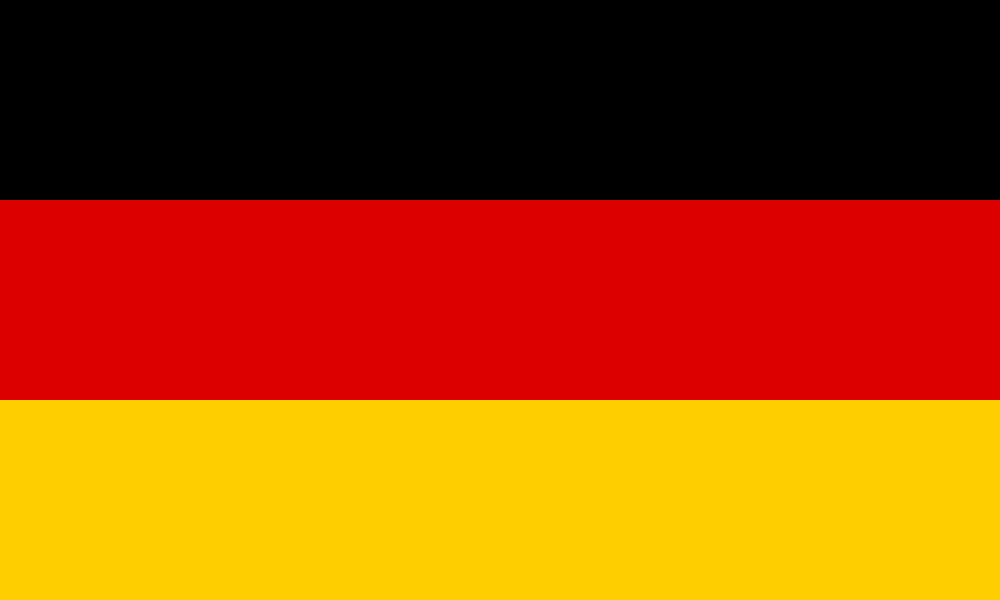 Germany
Slovenia
Germany
Slovenia
Your German licence is fully valid in Slovenia with no IDP and no surprises on speed or alcohol — both match home at 130 km/h and 0.05. The one thing that actually catches German drivers is the vignette: Slovenia requires an e-vignette to use any motorway, and a 7-day pass is cheap, while driving without one risks a fine many times its cost.
For German drivers, Slovenia is almost a non-event on paper — your licence needs no IDP, the motorway limit is the same 130 km/h you know, and the alcohol limit matches home at 0.05. So there is really only one thing to get right before you cross at Karawanks or Šentilj: the vignette.
Slovenia charges for motorway use through a digital e-vignette tied to your plate, and you cannot legally drive a single kilometre of motorway or expressway without one. The physical sticker is gone; it is all electronic now. For a short trip the 7-day car vignette costs around EUR 16, which is trivial — but the penalty for being caught without one runs into the hundreds, since plate-reading cameras catch unregistered cars automatically and bill them. Buy yours online or at a petrol station near the border before you join the network. Our Slovenia vignette guide lays out the pass options and current prices, and the vignette countries guide is handy if your route also clips Austria or Croatia.
Beyond the vignette, Slovenia drives much as Germany does. The country is small and the motorways are good, but the scenery pulls you onto mountain roads — the climbs around Bled, Lake Bohinj and the Vršič pass are narrow, steep and busy in summer, so allow time and use low gears on the descents. Winter tyres are mandatory from 15 November to 15 March, or any time there is snow or ice, and police do check on the passes. Rural roads run at 90 km/h and towns at 50, with both fixed and mobile speed cameras; a typical speeding fine falls in the EUR 50–120 range, which the speeding fine calculator can break down by band.
The car should carry a warning triangle, reflective vest and first-aid kit. Fuel sits around EUR 1.58/litre, and the emergency number is 112. For the full set of rules — tunnels, tolls and Ljubljana’s restricted city centre — see our Slovenia driving guide. But the takeaway from Germany is simple: register the e-vignette before the first motorway sign, and everything else will feel like home.
Speed limits, fines, equipment & license requirements
Your home country driving rules for reference
Side-by-side driving rules comparison
Renting a Car?
Compare prices from all major rental companies. Free cancellation on most bookings.
Compare Car Rental PricesSome links on this page are affiliate links. We may earn a commission at no extra cost to you. How our affiliate links work.
More Free Tools
Explore TyreMap
Winter tyres in Slovenia — 2026–27 season
Winter tyres are compulsory on fixed dates in Slovenia: 15 Nov - 15 Mar.
- Legal winter tread minimum: 3 mm — not the 1.6 mm figure most guides quote, which is the year-round minimum.
- Accepted marking: M+S or 3PMSF (min 3 mm tread)
- Studded tyres: banned
- Penalty: EUR 125 (EUR 417 if the car causes an obstruction)
In Slovene the rule is zimske pnevmatike, and snow chains are snežne verige — that is the wording on signs, in hire-car paperwork and on any penalty notice.
Checked against national legislation, 19 Jun 2026 · Full Slovenia tyre law · Compare all countries
Frequently Asked Questions
Yes, for all motorways and expressways. Slovenia uses a digital e-vignette linked to your number plate; a 7-day pass costs roughly EUR 16 for a car. Buy it before you join the motorway — there is no physical sticker any more.
No. As an EU licence holder your German permit is accepted directly. Carry it with the car's papers and insurance details.
Yes, in wintry conditions. From 15 November to 15 March, or whenever there is snow or ice on the road, winter tyres (or chains carried) are mandatory — relevant on the alpine passes near Bled and the Julian Alps.