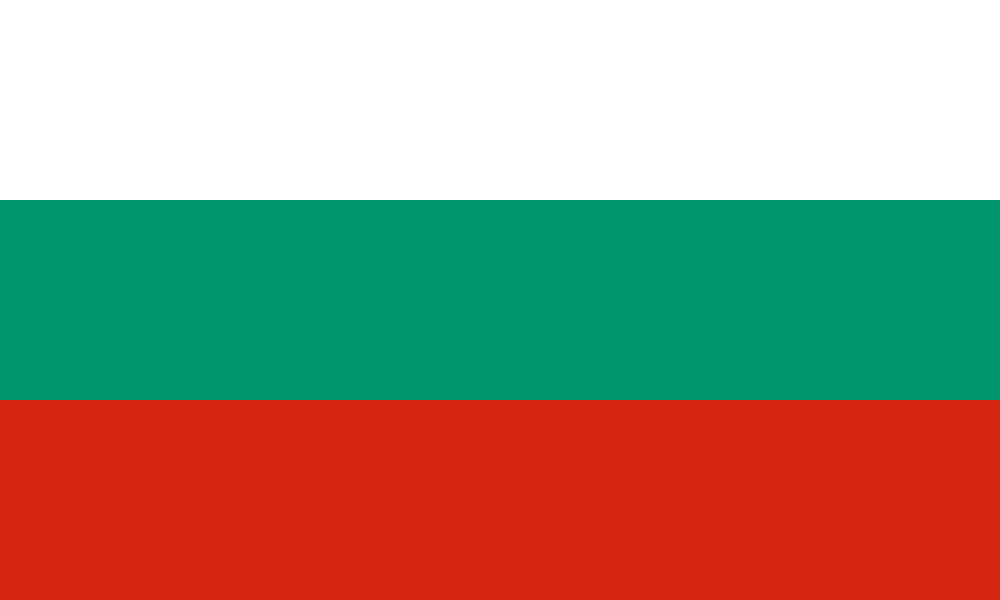
Bulgaria on a South Korean Licence — Bring an IDP, Buy the Vignette
 South Korea
Bulgaria
South Korea
Bulgaria
Two things to organise before you drive in Bulgaria as a South Korean visitor. Carry an International Driving Permit with your Korean licence, since rental desks and police expect it; and buy the electronic e-vignette against your number plate before any motorway. You keep to the right as at home, and motorways run a quick 140 km/h.
A South Korean visitor has two things to sort before turning a wheel in Bulgaria, and both are easier done in advance than fixed on the spot. The first is the International Driving Permit. Bulgaria does not always demand it on paper, but rental desks and roadside police expect to see one alongside your Korean licence, because it carries a certified translation they can read. Arrange it in Korea before departure and carry both documents plus your passport together; the Driving Permit Checker confirms the requirement for your case.
The second is the e-vignette, and this one has no equivalent at home. Bulgaria charges for motorway and main-road use through an electronic permit linked to your number plate — no sticker, no toll booth, just automatic plate-reading cameras. That means the vignette must be active before you join a motorway, not bought along the way. Pick it up online or at a kiosk near the border, choose your duration, and keep the confirmation. Our vignette countries guide is useful if your trip crosses into neighbouring states.
The driving itself is comfortable for a Korean licence holder: you stay on the right as at home, so there is no side switch. The pace is faster, though — 140 km/h on motorways against Korea’s 110, with 90 rural and 50 in towns. The alcohol limit is 0.05, slightly looser than Korea’s 0.03, so the caution you bring keeps you clear. Newer motorways are good; older rural roads can be rough and slower, so read the surface rather than the sign. A 10 km/h overshoot is about EUR 25.56 (≈ €25) — the Speeding Fine Calculator shows the bands.
Carry the required triangle, reflective vest, first-aid kit and fire extinguisher. Fuel is roughly $1.32/litre, the emergency number is 112, and police can fine on the spot, so keep a card or cash. See the Bulgaria driving guide for the full rules.
Bulgaria adopted the euro on 1 January 2026. Figures previously published in leva were converted at the fixed statutory rate of 1.95583 leva to the euro.00 to the euro.
Speed limits, fines, equipment & license requirements
Your home country driving rules for reference
Renting a Car?
Compare prices from all major rental companies. Free cancellation on most bookings.
Compare Car Rental PricesSome links on this page are affiliate links. We may earn a commission at no extra cost to you. Learn more.
More Free Tools
Explore TyreMap
Winter tyres in Bulgaria — 2026–27 season
Winter tyres are compulsory on fixed dates in Bulgaria: 15 Nov - 1 Mar.
- Legal winter tread minimum: 4 mm — not the 1.6 mm figure most guides quote, which is the year-round minimum.
- Accepted marking: Winter-designed tyre OR any tyre with at least 4 mm tread (no M+S/3PMSF requirement)
- Studded tyres: banned
- Penalty: ~€25.56 (EUR 25.56 at the fixed conversion rate; Bulgaria adopted the euro on 1 Jan 2026)
In Bulgarian the rule is зимни гуми, and snow chains are вериги за сняг — that is the wording on signs, in hire-car paperwork and on any penalty notice.
Verified against national legislation, August 2026 · Full Bulgaria tyre law · Compare all countries
Frequently Asked Questions
It is recommended and worth carrying. It gives police and rental staff a certified translation of your Korean licence and avoids disputes — arrange it in Korea before you fly.
Yes. Bulgaria uses an electronic e-vignette tied to your number plate, checked by camera, with no toll booths. Buy it online or at a border kiosk before joining a motorway.
Up to 140 km/h, faster than Korea's 110, with 90 on rural roads and 50 in towns. A 10 km/h overshoot is around EUR 25.56 (about EUR 25).